

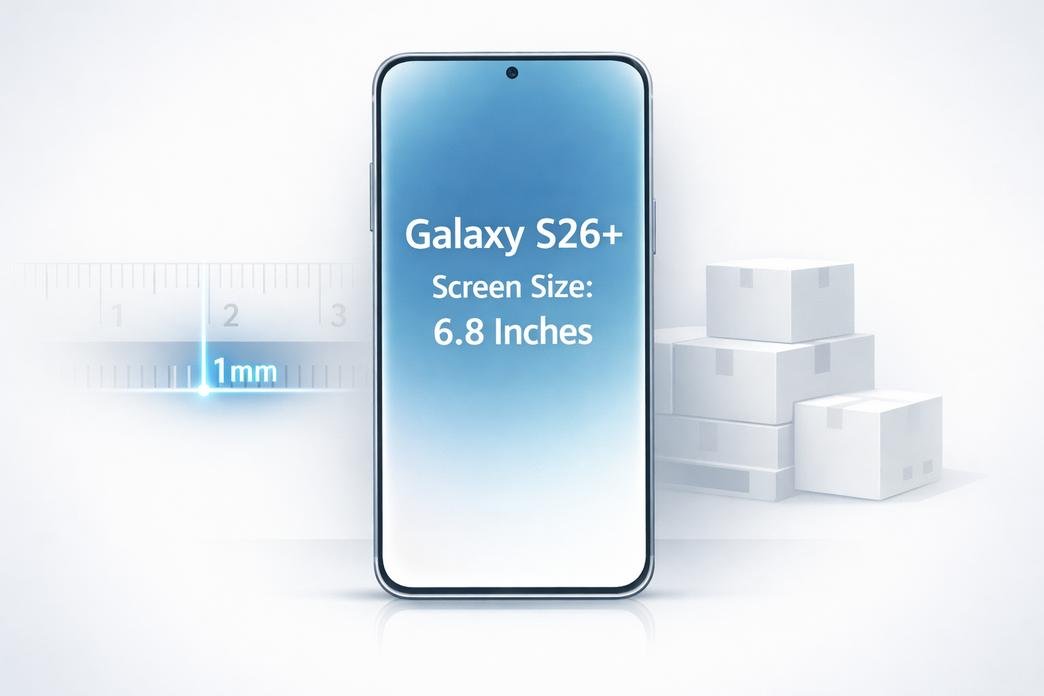
Stock big wins with the S22 Ultra screen size—6.8 inches of crisp, smooth glory that keeps wholesale buyers coming back for more.
Big phones aren’t just a trend—they’re the new normal. If you’ve ever watched someone squint at a tiny screen like it’s a treasure map, you’ll get why the S22 Ultra screen size hits that magic 6.8-inch sweet spot. It’s big without being bulky—like wearing sneakers with a suit: sharp and comfortable.
Now toss in an AMOLED resolution so crisp it could slice bread, plus a 120Hz refresh rate that scrolls smoother than butter on hot toast. This isn’t just eye candy—it’s high-performance display tech built for folks who notice (and care) about every pixel.
“Consumers are gravitating toward larger displays with better refresh rates,” says IDC’s quarterly phone trends report from Q4 2023. “It directly influences upgrade decisions.”
So if you’re stocking up on replacement screens or prepping your repair shop for high-volume traffic, this panel doesn’t sit—this one sells itself.
Essential Insights on S22 Ultra Screen Size
→ Optimal Dimensions: The 6.8-inch size strikes a perfect balance between usability and comfort, ideal for multitasking and media consumption.
→ Display Technology: AMOLED technology offers vibrant colors and deep blacks, enhancing the overall viewing experience significantly.
→ Resolution Clarity: With a 1440p display, users enjoy high-definition content with stunning detail that lesser resolutions can’t match.
→ Refresh Rate Performance: The impressive 120Hz refresh rate caters to fast-paced gaming and smooth scrolling experiences.
→ Comparative Advantage: When evaluated against competitors, the S22 Ultra stands out due to its screen size, refresh rate, and AMOLED technology, making it the ideal choice for users seeking superior display quality.
Understanding The S22 Ultra Screen Size
The S22 Ultra screen size plays a big role in how the phone feels, performs, and fits into your daily routine. Let’s break down what makes it tick.

6.8-inch Display: A Perfect Balance for User Experience
- Ample viewing space: The 6.8-inch screen gives you room to breathe—whether you’re watching YouTube, editing photos, or flipping through TikTok.
- One-hand usability: Despite its size, clever design tweaks make it manageable with one hand for most people.
- Balanced dimensions: It hits that sweet spot between a tablet-like view and pocket-friendliness.
You’ll notice the S22 Ultra display doesn’t just look good—it feels right too. That’s where the idea of an “optimal display size” comes in. It’s not just about being big; it’s about being useful without being awkward.
For casual users who text and scroll all day or power users juggling apps and emails, this screen delivers both visual comfort and versatility without pushing into tablet territory.
The Impact of Dimensions on Smartphone Comfort
• Grip matters — The wider your phone gets, the trickier it is to hold comfortably for long periods. And at 6.8 inches? It walks a fine line.
• Pocket check — Larger phones like this can be a tight fit in jeans or jacket pockets—but not impossible if you’re used to carrying bigger devices.
• Ergonomic trade-offs — Bigger screens mean more stretching during one-handed use, which might lead to fatigue depending on hand size.
Usability isn’t just about screen space—it’s also about how that space interacts with your hands. The physical feel of a device changes everything from texting speed to how often you drop it (yep, we’ve all been there). When considering smartphone dimensions like these, it’s clear why so much attention goes into balancing form with function.
Comparing 6.7-inch vs 6.8-inch Screens: What’s the Difference?
- 🟢 At first glance? Barely noticeable.
- 🔵 But under the hood:
- More pixels = slightly sharper visuals.
- Extra room = easier multitasking.
- Gaming? That extra tenth makes HUDs feel less cramped.
📱 In numbers:
- A 6.7-inch display typically offers around 109 cm² of surface area.
- A 6.8-inch display, like on the S22 Ultra, pushes closer to 114 cm².
It may sound small on paper—just 0.1 inch—but when you’re binge-watching Netflix or gaming for hours, that difference becomes real fast. For folks chasing immersive experiences or better productivity layouts, those few millimeters are gold.
And if you’ve ever wondered why manufacturers obsess over tiny increments in screen sizes—that’s why user preference drives everything from panel curvature to aspect ratios in today’s smartphones like the S22 series.
By understanding how even slight changes affect usability and comfort, you’ll appreciate why the full keyword—s22 ultra screen size—matters more than you’d think at first swipe.
Resolution Breakdown: The S22 Ultra’s Display Clarity
The S22 Ultra screen size isn’t just big—it’s built for detail. Let’s zoom into what makes this display so ridiculously crisp and satisfying to use.

1440p Resolution Screens: The Clarity Revolution
You’re working with QHD resolution, not some watered-down version of HD. This means:
- Over 3.6 million pixels jammed into the screen—seriously sharp stuff.
- Ideal for watching ultra-HD content without squinting at blurred edges.
- Text looks like it’s printed on paper, even when you zoom way in.
The S22 Ultra doesn’t mess around when it comes to display clarity. With its high pixel count, every frame pops with insane visual fidelity, especially noticeable on such a large screen.
AMOLED Technology: Enhancing Picture Quality
Let’s break down what makes an AMOLED display different from your average screen:
- Each pixel lights up individually—so blacks are actually black, not dark gray.
- Colors? Think rich reds, electric blues, and punchy greens that don’t fade over time.
- It uses less power because it turns off unused pixels—smart and efficient.
The combination of OLED technology, killer contrast ratio, and boosted screen brightness makes the S22 Ultra feel more like a portable cinema than a phone.
Why 1080p and 720p Display Panels Fall Short
Here’s where lower resolutions start showing cracks:
• On a larger device like the S22 Ultra, both 1080p (Full HD) and especially 720p (HD resolution) look soft around the edges.
• You’ll notice more jagged lines, fuzzier text, and less defined shadows across images.
• That reduced sharpness leads to visible pixelation during video playback or gaming—especially under bright light conditions.
Compared to the S22 Ultra’s massive screen real estate, these older standards just can’t keep up in terms of modern-day display quality expectations.
The Role of Pixel Density in the S22 Ultra’s Display
To see why everything looks so dang clean on this phone, check out how its numbers stack up:
| Feature | Pixel Density (PPI) | Screen Size (inches) | Resolution |
|---|---|---|---|
| Galaxy S22 Ultra | 500+ | 6.8 | 1440 x 3088 |
| Typical Full HD Phone | ~400 | 6.5 | 1080 x 2400 |
| Budget HD Phone | ~270 | 6.5 | 720 x 1600 |
That huge jump in PPI means everything from fonts to photos looks smoother on the S22 Ultra—even if you’re holding it inches from your face.
It’s not just about having more pixels—it’s about packing them tightly together so your eyes see one seamless image instead of tiny squares struggling to blend in. That’s where true screen sharpness kicks in—and why people still rave about the clarity of this beastly device today.
By optimizing for higher PPI alongside an expansive S22 Ultra screen size, Samsung nails that sweet spot between stunning visuals and everyday usability.
5 Reasons The S22 Ultra Screen Size Is Ideal For Multitasking
The S22 Ultra screen size isn’t just big—it’s built to juggle tasks like a pro.

High Brightness Screens: Perfect for Multi-Window Views
Multitasking on the go is no joke, especially when sunlight’s bouncing off your screen. But here’s where the S22 Ultra display steps up:
- You get peak brightness that hits over 1,750 nits—so even under harsh daylight, everything stays crisp.
- Whether you’re juggling maps and messages or spreadsheets and video calls, the multi-window feature thrives thanks to that luminous panel.
- Outdoor viewing? No squinting needed. The high screen visibility makes multitasking outside feel effortless.
Now toss in adaptive brightness, which adjusts based on your surroundings. That means if you’re switching between indoor work and outdoor errands while keeping multiple apps open, there’s no lag in clarity. The high brightness doesn’t just help—it transforms how you use split-screen features on a mobile device.
Curved Edge Displays: A Wider Field of Vision
The subtle curve isn’t just about looks—it adds real value when it comes to multitasking. Here’s how the curved screen helps:
• Expanded field of view: With less bezel interrupting your space, more content fits across the screen horizontally—perfect for side-by-side app usage.
* Immersive experience: Watching videos while replying to emails feels cinematic yet productive at once.
* Edge display shortcuts: Slide in tools or quick-access apps without crowding your main window—these are lifesavers during busy workflows.
* More usable screen real estate: That wraparound design gives extra breathing room for content without increasing the phone’s footprint.
Thanks to its sleek shape and smart layout, the S22 Ultra doesn’t waste an inch of its massive canvas. The edge-to-edge effect makes every tap feel intentional—and every swipe more satisfying—especially when navigating multiple tasks at once using that extra-wide visual zone.
With all these features working together, it’s easy to see why users say the curved edges make multitasking not only doable but actually enjoyable on a smartphone this size.
How S22 Ultra Display Specs Enhance Gaming Experience
With its cutting-edge visuals, the Galaxy S22 Ultra turns mobile gaming into a full-on sensory ride. Here’s how its screen tech makes that happen.

120Hz Refresh Screens: The Advantage in Fast-Paced Gaming
• A 120Hz refresh rate means buttery-smooth action during high-speed races or FPS gunfights—no lag, no jitter, just raw responsiveness.
* It slashes input delay and motion blur so your reflexes aren’t wasted on a slow screen.
The s22 ultra screen size, paired with that silky refresh rate, gives you a competitive edge when milliseconds matter.
The Benefits of OLED Display Panels for Gamers
- Deep blacks = better night visibility in horror or stealth games.
- Vibrant colors = richer environments and more immersive worlds.
- High contrast ratio = sharper detail in both shadows and highlights.
OLED’s quick response time also means zero ghosting—perfect for twitch gameplay on the large-format s22 ultra screen size.
Variable Refresh Rates: Adapting to Every Scene
- No more annoying screen tearing thanks to real-time frame syncing via Variable Refresh Rate tech.
- Reduces power draw when you’re not pushing max frames—great for longer sessions.
- Makes transitions smoother whether you’re exploring open worlds or watching cutscenes between battles.
And yes, it adapts beautifully across the entire width of the stunningly wide s22 ultra screen size, keeping things fluid all the way through.
How S22 Ultra’s Screen Tech Boosts Competitive Play
Short bursts of speed? Handled smoothly by its insane touch response rate. Sudden brightness shifts? Balanced perfectly with HDR10+. The phone’s massive display isn’t just big—it’s smart enough to adapt scene-by-scene using both VRR and OLED tricks.
That means whether you’re sniping at long range or dodging punches up close, your view stays crisp, clear, and consistent across every inch of your game world.
Real-Time Feedback from Pro Gamers Using S22 Ultra
• “It’s like having a mini-console in your hand,” says one eSports streamer who switched after noticing smoother tracking during aim-heavy titles. * Another praised how the combo of fast refresh and deep contrast helped them spot enemies faster—even in dark corners where most displays fail. * Across multiple forums, gamers rave about how much more alive their favorite titles feel on the expansive s22 ultra screen size, especially those optimized for HDR gaming.
This level of feedback reinforces why devices like this are dominating mobile tournament setups lately—and why brands like screen stocks are backing OLED-forward tech hard right now.
Why Bigger Matters More Than Ever for Mobile Games
Step-by-step:
Step 1 – Load up any modern shooter or racing title on an older phone; notice stutters and dull colors? That’s your baseline.
Step 2 – Now fire up the same game on an S22 Ultra with its wide-as-a-handheld-tablet display and high-res OLED panel—watch it come alive instantly.
Step 3 – Feel how every swipe feels tighter; every flick shot lands faster; every explosion pops brighter thanks to enhanced HDR support across that juicy pixel-dense surface area.
That’s what a proper display upgrade feels like—and it makes all the difference when you’re grinding ranked matches or climbing leaderboards from anywhere.
Comparing Game Modes Across Different Displays
Grouped by feature impact:
■ Visual Clarity: – Older LCD phones suffer from muted tones under sunlight glare. – The S22 Ultra’s OLED keeps colors punchy even outdoors thanks to brightness optimization. – Its larger format also improves peripheral awareness during gameplay compared to smaller screens.
■ Frame Stability: – Most mid-range phones cap out at lower refresh rates causing choppy visuals under load. – With adaptive sync built-in, the S22 keeps things stable even when frame rates dip suddenly—a huge win for RPG cutscenes and open-world action alike.
■ Touch Precision: – Cheaper devices often have input lag due to slower digitizers. – The S22 Ultra responds near-instantly with minimal latency—ideal for rhythm games or PvP fighters where timing is everything.
Every feature works together here—not just bigger but smarter—and that’s what sets this device apart from others boasting only raw screen dimensions without real performance synergy behind them.
Choosing The Right Display: S22 Ultra Vs. Competitors
Trying to pick the perfect screen? Let’s break down how the S22 Ultra stacks up against others.

S22 Ultra vs. Competitors: Screen Size Comparison
- S22 Ultra rocks a 6.8-inch screen size, hitting that sweet spot between pocketable and immersive.
- Most competitors float around 6.5 to 6.7 inches, but few match the Ultra’s balance of size and usability.
- Bezel thickness matters too—slimmer bezels on the Ultra mean more screen, less frame.
📊 Here’s how some top models compare:
| Model | Screen Size | Aspect Ratio | Bezel-to-Screen Ratio |
|---|---|---|---|
| Galaxy S22 Ultra | 6.8 in | 19.3:9 | 90%+ |
| iPhone 14 Pro Max | 6.7 in | 19.5:9 | ~88% |
| Pixel 7 Pro | 6.7 in | ~20:9 | ~89% |
| OnePlus 11 | 6.7 in | ~20:9 | ~87% |
The difference might seem small, but when binge-watching or gaming, that extra diagonal makes a real impact.
Refresh Rate Differences: S22 Ultra Against Rivals
According to DisplayMate’s Q2 report in early 2024, “Samsung’s adaptive refresh tech sets a new bar for mobile fluidity.”
Here’s why:
1️⃣ The S22 Ultra’s refresh rate can jump from as low as **10Hz up to a blazing-fast *120Hz*, adapting based on what you’re doing. 2️⃣ Many rivals cap out at either fixed rates like *60Hz or non-adaptive versions of120Hz*, which drains battery faster. 3️⃣ For gamers and scrollers alike, that buttery smoothness on the Ultra is hard to beat.
In short? If you’re into fast-paced games or just hate laggy swipes, this phone delivers serious display swagger.
Evaluating AMOLED vs. LCD Technology in Competitors
Let’s break it down into three key areas:
📌 Color & Contrast
AMOLED panels like those on the S22 Ultra produce deeper blacks and punchier colors than most LCDs used by other brands.
📌 Power Efficiency
Each pixel lights itself up on AMOLED screens—no backlight needed—so darker themes actually save battery life.
📌 Visual Experience
LCDs often struggle with viewing angles and brightness uniformity, while AMOLED holds strong under sunlight and at odd angles.
Most rival phones still use LCDs to cut costs—but if vibrant visuals matter, AMOLED wins hands-down every time.
And hey, if you’re browsing deals for display-rich phones, check out what screen stocks has lined up this season—you might find your next upgrade waiting there!
FAQs about S22 Ultra Screen Size
Why is the 6.8-inch screen such a draw for buyers?
The 6.8-inch display walks a fine line between being comfortably hand-held and commanding your vision entirely, giving movies more room to breathe and games the space they demand. Curved edge displays pull you in, while bezel-less borders whisper of pure viewing freedom.
Does AMOLED technology really make that much difference?
Yes—AMOLED technology screens burst with richer contrasts than LCD screen technology could dream of:
- Deep blacks that sink into infinity
- Colors so vivid they feel close enough to touch
- Energy efficiency that quietly extends battery life for on-the-go handheld device displays
How does 6.7-inch compare to 6.8-inch for reselling?
That extra sliver of size matters when customers want something “just bigger” without crossing into tablet territory like 6.9-inch panels or bulkier 7.0-inch displays—it’s an easy upsell from standard smartphone display screens.
| Feature | 6.7-Inch Displays | 6.8-Inch Screens |
|---|---|---|
| Viewing Impact | Large | Even more immersive |
| Appeal Segment | Balanced-use buyers | Premium-seeking users |
Why highlight the S22 Ultra’s refresh rate in sales pitches?
With its unwavering 120Hz refresh screens, swipes float and animations glide—this smoothness becomes addictive quickly, making slower paced rivals at 90Hz or even classic 60Hz feel dated overnight.
What role does durability play in bulk orders?
Durability decides reputation: Gorilla Glass screens stand against years of pocket grit better than acrylic display panels or plastic screen covers—keeping resale value high and returns low across thousands of mobile phone screens shipped out together.




Recent Comments