

In the age of screen addiction and pocket real estate, the folding screen phone is no longer a sci-fi gimmick—it’s a boardroom battleground. When your company’s tech needs to look sharp and act smarter, choosing between Samsung, Pixel, and OnePlus isn’t just about specs; it’s about survival. Think cracked hinges during client demos or screens that ghost out in sunlight—yeah, nobody’s got time for that. You’re not buying phones; you’re investing in uptime, repair ease, and battery life that doesn’t die faster than your Monday morning motivation.
Truth is? Foldables aren’t built equal. Some brands flaunt ultra-thin glass like it’s armor-plated candy coating; others mix in fragile polymers that scratch if you breathe too hard. And with connector types like MIPI DSI vs ZIF buzzing around procurement meetings like angry bees—one wrong move could cost thousands per quarter in replacements alone. This guide breaks down what matters most when you’re buying at scale—not by hype but by heat-tested durability specs and real-world deployment feedback from teams who’ve lived through shattered dreams (and displays).
Quick Answers for the Corporate Folding Screen Phone Playbook
→ Durability First: UTG and CPI film lead the charge in scratch resistance and screen longevity; choose based on your field conditions.
→ Connector Compatibility: MIPI DSI, FPC, ZIF, and ribbon cables offer varied ease-of-repair and integration—know what your IT team can handle.
→ Display Matters Outdoors: Go sunlight-readable with anti-glare AMOLED or high-brightness LCDs for clear visuals in sales-heavy environments.
→ Power Efficiency Wins: Low power consumption features like AMOLED panels help extend battery life across large deployments.
→ Lease vs Buy Strategy: Leasing cuts upfront costs while buying secures long-term ROI—match this to your upgrade cycles.
Pixel Folding Screen Phone Series Overview
A quick tour through the coolest screen tech and design choices behind the Pixel Fold and its flip-style sibling.
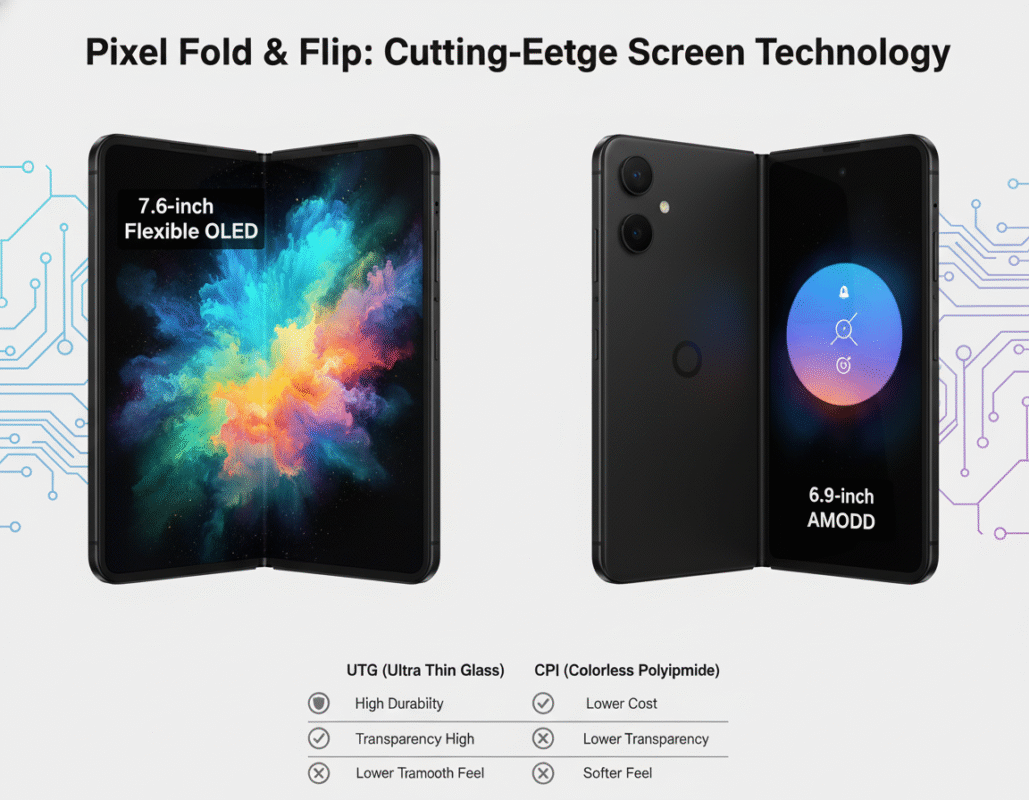
Pixel Fold: 7.6-inch Flexible OLED Screen Highlights
- The Pixel Fold’s display stretches across a generous 7.6 inches when open, offering an immersive tablet-like experience that slips into your pocket.
- Built with flexible OLED tech, it delivers punchy colors, deep blacks, and stellar contrast—even under bright light.
• It supports HDR10+ and a smooth refresh rate up to 120Hz, making scrolling feel buttery smooth.
• Corning’s protective layer improves scratch resistance while keeping things feather-light.
→ Whether you’re gaming or binge-watching shows on your folding screen phone, this screen won’t disappoint.
Pixel Flip’s 6.9-inch 2200×1860 High-Resolution AMOLED Display
Grouped highlights of the display specs:
Display Type: AMOLED | Size: 6.9 inches | Resolution: 2200 x 1860 pixels | Refresh Rate: Up to 144Hz
— Ultra-crisp visuals make it ideal for creators who need color accuracy on-the-go.
— The pixel density rivals some tablets, despite being a compact foldable device.
— Peak brightness hits over 1500 nits, which means you can scroll TikTok even under direct sunlight.
And yes, this folding screen phone still folds neatly into your jeans pocket without any weird bulges.
UTG vs. CPI Film in Pixel’s Durable Screen Materials
Here’s how Ultra Thin Glass (UTG) stacks up against Colorless Polyimide (CPI):
| Feature | UTG | CPI |
|---|---|---|
| Durability | Higher scratch resistance | More flexible but prone to creasing |
| Transparency | Superior clarity | Slight yellow tint |
| Manufacturing Cost | Higher | Lower |
| Feel | Feels like real glass | More plastic-like |
According to DSCC’s Q2 report from April 2024, UTG adoption now exceeds CPI by over 60% among premium foldables due to better tactile performance and longevity.
So if you’re wondering why your new Pixel Fold feels so sturdy yet sleek—that’s the UTG magic working overtime.
Integrating MIPI DSI and FPC Connectors in Pixel Screens
MIPI DSI isn’t just jargon—it’s what makes those stunning displays actually work right with the rest of the hardware:
- MIPI DSI (Display Serial Interface) ensures high-speed data transfer between the processor and screen.
- It allows for thinner bezels by reducing connector bulk.
- FPC (Flexible Printed Circuit) connectors enable bendable routing paths inside these foldables.
- Together they support high refresh rates without lag or tearing—a must-have for modern multitasking.
Without these two technologies working together under the hood, no amount of OLED wizardry would save your folding experience from stutter-town.
The engineering finesse behind every swipe on a folding screen phone owes plenty to these silent heroes tucked beneath that shiny panel.
Comparative Specs Of Folding Screen Phone Displays
Let’s break down what makes a folding screen phone tick, from the tech under the glass to how it all connects behind the scenes.
Screen Type
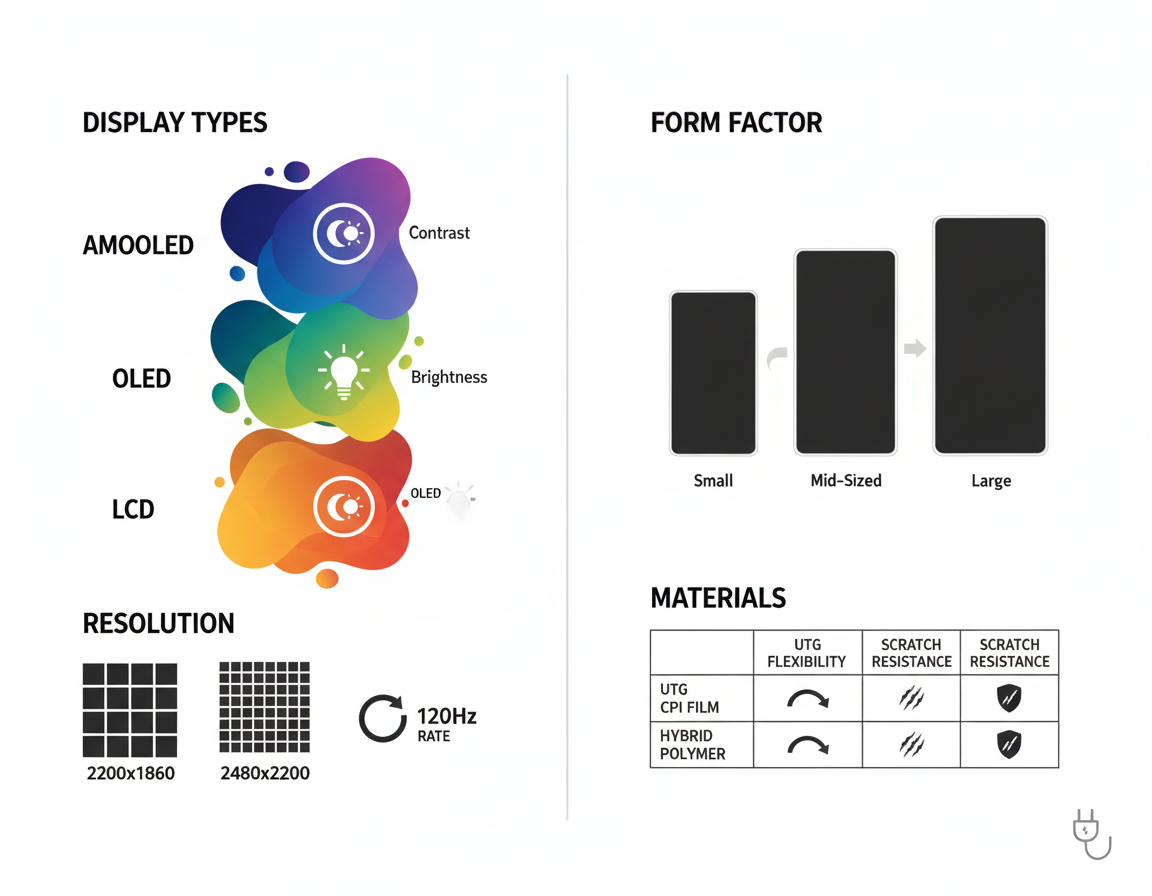
When it comes to folding screen phones, the display technology used can make or break your experience. Here’s how different types stack up:
- AMOLED panels offer deep blacks and punchy contrast but tend to be more expensive.
- OLED is similar but may have slightly lower brightness in direct sunlight.
- Foldable LCDs are cheaper but compromise on color richness and flexibility.
💡 Users looking for vibrant colors and smooth transitions should go for AMOLED if budget allows—it handles high refresh rates better, which matters for gaming or scrolling-heavy use.
Now toss in factors like power efficiency and burn-in potential. OLED and AMOLED sip power gently, extending battery life while keeping visuals crisp. But beware of static UI elements—they can ghost over time, especially on OLEDs without pixel-shifting tech.
Ultimately, the best pick depends on your priorities—whether that’s durability, cost-efficiency, or buttery-smooth animations with top-tier color accuracy.
Screen Size
Foldables aren’t just about bending—they’re about space optimization too. Here’s how various sizes cater to different needs:
📱 Small Format Foldables (~6.2″ folded / ~7.6″ unfolded)
• Great for portability; fits easily in pockets
• Ideal for casual users who want a tablet feel without bulk
📲 Mid-Sized Foldables (~7.8″ – 8″)
• Balanced between comfort and productivity
• Suits multitaskers who need split-screen functionality
🖥️ Large Format Foldables (~8.3″ – 9″)
• Offers immersive video-watching and document editing experience
• Better suited for business users or digital artists
Choosing a size isn’t just about numbers—it’s about what you do with it day-to-day. If you’re mostly messaging and browsing, smaller works fine. But if you’re editing PDFs or sketching designs? Bigger is better.
Screen Resolution
Not all pixels are created equal when it comes to foldable displays—resolution plays a huge role in clarity:
1️⃣ A resolution like 2200×1860 delivers solid sharpness across common fold sizes—great balance of detail without draining too much battery.
2️⃣ Higher-end models push up to 2480×2200 pixels—fantastic for media consumption where every pixel counts.
3️⃣ Keep an eye on aspect ratio too—wider screens are awesome for multitasking but may cause letterboxing issues with some apps.
4️⃣ Resolution directly affects text crispness during zoomed views; this matters when reading documents or eBooks on-the-go.
5️⃣ Refresh rate pairs with resolution—higher res needs at least 120Hz refresh rate to avoid laggy visuals during fast swipes or gaming sessions.
Bottom line? High-res screens bring out the best in foldable devices—but only if paired with solid processing power and optimized software scaling across apps.
Screen Material
The material beneath your fingers determines both durability and tactile feel—and here’s where things get real technical:
| Material Type | Flexibility Rating | Scratch Resistance | Common Use Case |
|---|---|---|---|
| UTG (Ultra Thin Glass) | Medium | High | Premium flagships |
| CPI Film | High | Low | Budget foldables |
| Hybrid Polymer | Medium-high | Medium | Mid-range models |
| Dual-layer UTG + Film | Low | Very High | Rugged builds |
UTG offers better protection against scratches than plastic-based CPI films—but it’s less flexible over time unless reinforced properly by hinge design improvements. Meanwhile, CPI remains more pliable but attracts micro-abrasions easily—even fingernails can leave marks after months of use!
If you’re someone who throws their device into bags without cases? Stick with UTG variants—they’ll take more abuse before showing wear-and-tear signs.
Screen Connector
Connecting that flexible display to the motherboard isn’t as simple as snapping Lego pieces together—it requires precision engineering across multiple steps:
🔧 Step 1: Choose a connector type based on bandwidth needs:
- MIPI DSI supports high-speed data transfer ideal for vibrant displays
- FPC connectors offer slim profiles suitable for tight hinge areas
- ZIF connectors simplify assembly/disassembly during repairs
🔧 Step 2: Ensure mechanical compatibility with folding hinges:
- Cable length must accommodate repeated folds without stress fractures
- Reinforced solder points help prevent detachment over time
🔧 Step 3: Validate signal integrity through EMI shielding:
- Poorly shielded connectors lead to flickering screens or touch lag
- Advanced shielding improves overall user experience by stabilizing signals
A bad connector setup might not show issues right away—but give it six months of daily folds, and suddenly your screen goes black mid-scroll! So yeah… these tiny parts matter—a lot—in keeping your phone’s touch sensitivity responsive over time.
By understanding these under-the-hood details, you’ll know exactly what you’re getting next time you pick up a shiny new folding screen phone—or maybe even why some cost twice as much as others!
Folding Screen Phone Pricing: Lease Vs Buy
Trying to decide between leasing or buying that slick new folding screen phone? Let’s break it down so you know exactly what you’re getting into.
Lease
Leasing a folding screen phone might look like the cheaper road, but don’t let those low monthly payments fool you. Here’s what really matters:
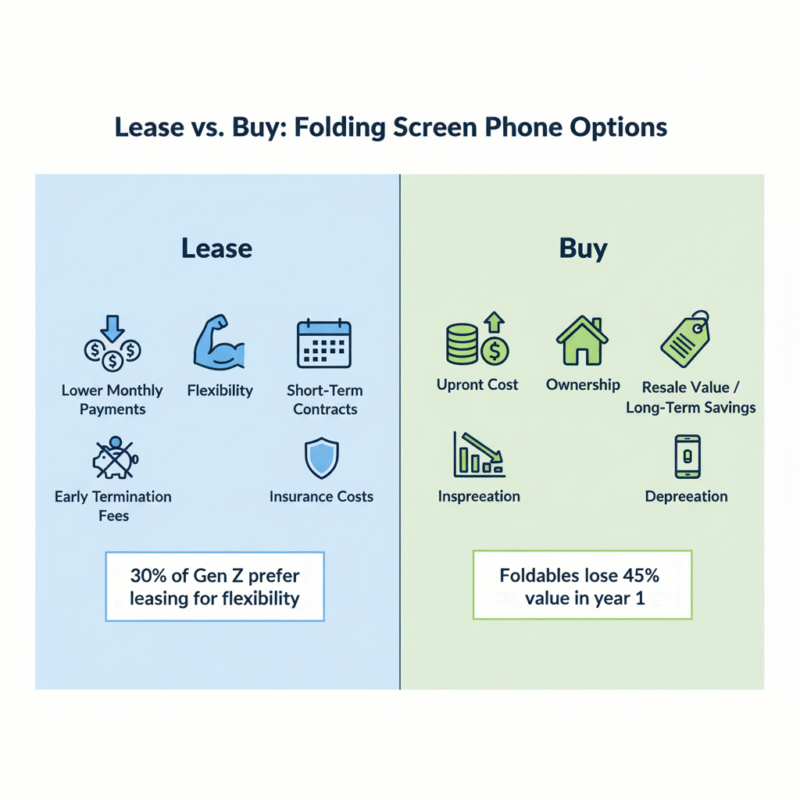
- Monthly payments are usually lower than buying outright, making it easier on your wallet short-term.
- You avoid massive upfront costs—ideal if you’re cash-light but tech-hungry.
- Contracts typically run between one to two years, so you’re not locked in forever.
But there’s more under the hood:
• Most lease agreements come with fine print—like early termination fees if you bail early.
• You won’t own the device unless you pay extra at the end via a purchase option clause.
• You’ll likely need to tack on insurance costs, since damage during the lease is still your problem.
According to IDC’s Q1 2024 report, over 30% of Gen Z users prefer leasing because they “want flexibility and constant access to cutting-edge features without long-term commitment.” That sums up why leasing is booming among younger users chasing every new foldable release.
Buy
Buying a folding screen phone straight up? It’s all about control and long-term value—but there are trade-offs.
Grouped by benefit type, here’s how ownership stacks up:
— Financial Benefits:
• No recurring monthly payments, just one big hit.
• Avoids hidden charges tied to contract length or usage caps.
— Ownership Perks:
• Full control over upgrades, customization, and resale timing.
• The device becomes an asset with potential resale value, especially if kept in good shape.
— Long-Term Value:
• Lower overall total cost of ownership, assuming you keep it for several years.
• No worrying about surprise penalties from breaking terms like in a lease.
Still, don’t ignore depreciation—it hits hard and fast with smartphones. Foldables lose around 45% of their value within the first year, according to Counterpoint Research’s April 2024 survey on flagship device trends.
If you’re someone who likes holding onto devices until they fall apart—or just hate contracts—buying could be your best move. Just make sure that shiny screen fits your budget before going all-in.
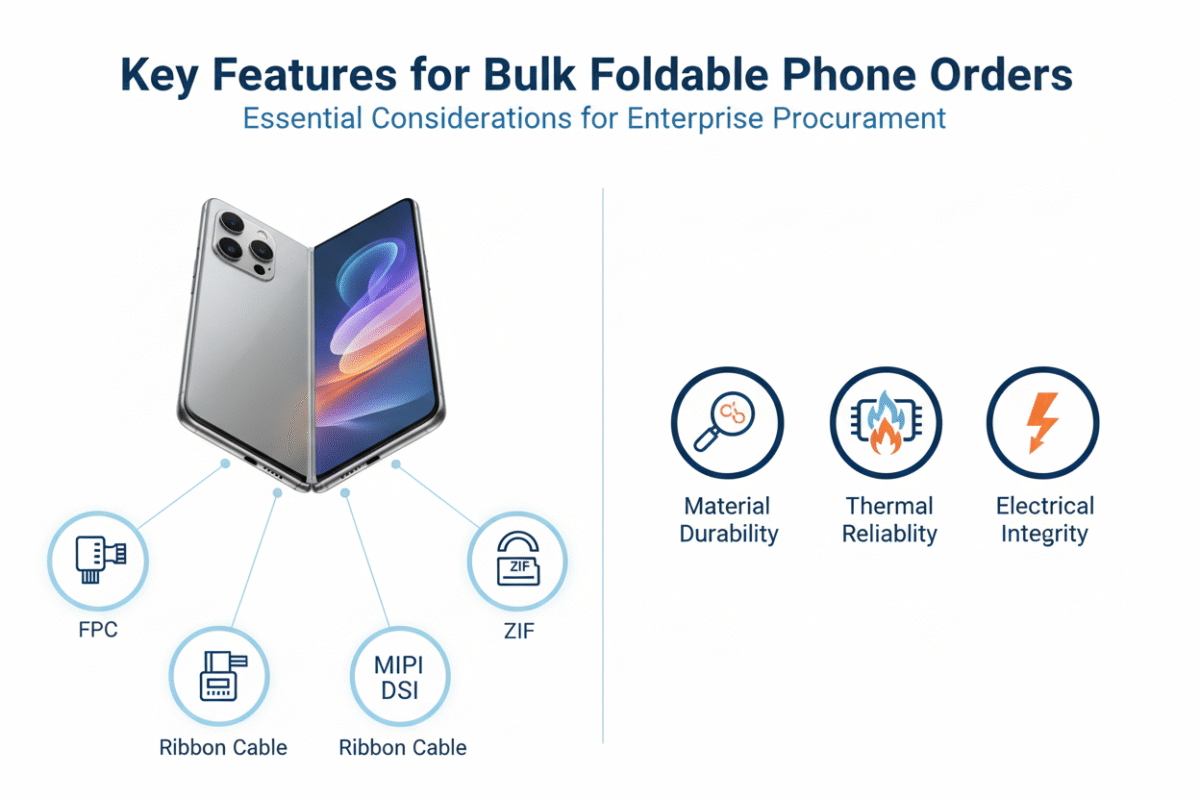
Key Features For Bulk Foldable Phone Orders
Buying in bulk? Here’s what matters when choosing foldable screen phones for your business or enterprise setup.
4 Screen Connector Options for Corporate Integration
Different devices, different needs. That’s why commercial buyers should get familiar with these connector options:
- MIPI DSI: Ideal for high-speed data transfer and smoother visuals on foldable display panels. Common in flagship folding screen phone models.
- Flexible Printed Circuits (FPC): Thin, bendy, and perfect for tight internal layouts in dual-screen or tri-fold designs.
- Zero Insertion Force Connectors (ZIF): Easy to install without damaging sensitive display components—great for assembly-line efficiency.
- Ribbon Cables: Still used in some custom builds; they’re cost-effective and compatible with older industrial systems.
Each connector type can impact customization options, so make sure to match your hardware needs before placing that big order.
3 RoHS-Compliant Display Testing Standards
When sourcing foldable screen phones in volume, RoHS compliance isn’t just a checkbox—it’s a must-have. Here’s what the top testing standards look like:
- Heavy Metal Screening – Ensures lead, mercury, cadmium levels are within legal limits.
- Flame Retardant Verification – Confirms no banned brominated flame retardants are present.
- High Voltage Leakage Test – Certifies safety under power stress conditions.
These tests don’t just protect the environment—they also boost long-term quality control and reduce return rates on large orders.
5 Low Power Consumption Display Features
Energy-saving displays aren’t just about battery life—they keep your fleet running cooler and longer between charges:
• AMOLED panels offer self-emissive pixels that only light up when needed—perfect for always-on displays.
• Adaptive refresh rate tech reduces power draw during idle usage or static content viewing.
• Integrated touch sensors save space and juice by combining layers into one efficient unit.
For procurement teams focused on sustainability and budget control, these features help lower operational costs over time while supporting eco-conscious goals tied to warranty and support agreements.
4 Scratch-Resistant and Durable Screen Materials
Foldables take a beating—especially when used by field teams or sales reps on the go. Here’s how durability stacks up across materials:
| Material Type | Hardness Rating | Flexibility | Common Use Case |
|---|---|---|---|
| Ultra-Thin Glass (UTG) | ★★★★☆ | Moderate | Flagship folding phones |
| Colorless Polyimide Film (CPI) | ★★★☆☆ | High | Mid-tier flexible screens |
| Hybrid Polymer-Coated Glass | ★★★★☆ | Medium-high | Business rugged models |
| PET-based Laminate Layers | ★★☆☆☆ | Very high | Budget foldables |
Choosing the right material ensures fewer cracks, better resale value, and less hassle with warranty and support claims down the line.
Customization Options Tailored to Your Fleet Needs
Every company has its quirks—from software overlays to biometric locks—and bulk orders need flexibility:
- Choose OS versions pre-installed with enterprise apps
- Opt-in for branded boot animations or UI themes
- Request specific camera configurations or storage tiers
- Add anti-glare coatings or privacy filters if required
These tweaks may affect lead times, but they’re worth it if you want your folding screen phone fleet truly tailored to your brand DNA.
Volume Discounts That Actually Scale
Getting a deal is one thing—but getting smart volume pricing? That’s where “screen-stocks” comes in clutch:
Step One: Define quantity brackets—usually at thresholds like 100+, 500+, or 1000+ units.
Step Two: Negotiate based on recurring purchases vs one-time buys.
Step Three: Lock pricing early before component costs fluctuate seasonally.
The more you buy, the more you save—and not just per unit cost but also via bundled services like extended warranties or free shipping promos tied into minimum order quantity thresholds.
Lead Times That Work With Your Launch Schedule
Short timelines don’t have to mean shortcuts in quality—just smart planning around production windows:
• Standard builds usually ship within three weeks post-payment confirmation.
• Customized units may take up to six weeks depending on spec complexity.
• Rush orders? Possible—but might incur extra charges unless negotiated upfront under special terms linked to your payment terms agreement.
Always clarify estimated delivery windows before signing off—it saves you headaches later when aligning product rollouts with marketing campaigns.
Shipping & Logistics Support You Can Count On
Bulk shipments come with their own set of challenges—but reliable logistics partners make all the difference:
Grouped by Service Type:
▶ Domestic Freight – Ideal for companies ordering within national borders; faster turnaround time via ground carriers.
▶ International Air Cargo – Great for urgent B2B deliveries; customs clearance support included.
▶ Ocean Freight – Cost-effective option for mega-orders; requires longer lead time but slashes per-unit shipping costs.
Many suppliers now offer real-time tracking tools plus priority handling add-ons as part of their standard packages under their broader shipping and logistics umbrella—which makes managing inventory flow smoother than ever.
Worried About Durability? Corporate Folding Screen Phones
Durability isn’t just a bonus—it’s a dealbreaker for any corporate-ready folding screen phone.
Ultra Thin Glass (UTG) Versus Flexible Polymer Substrates
Choosing between UTG and polymer comes down to how much abuse your foldable can take:
• Ultra Thin Glass offers a smoother touch with better resistance to minor nicks but tends to crack under pressure if dropped hard.
• Flexible polymers, on the other hand, bend more easily and survive rougher handling but show wear faster with visible creases.
You’ll see UTG in premium models aiming for that glass-like feel, while polymer substrates are often used in ruggedized designs prioritizing flexibility over finesse. Either way, both materials rely heavily on advanced material science and reinforced screen protection layers to perform under stress.
CPI Film Coatings for Enhanced Scratch Resistance
A good folding display lives or dies by its outer coating—and CPI film is stepping up:
– Scratch-resistance gets a major boost thanks to chemically treated surfaces.
– Anti-glare properties help reduce fingerprint smudges and sunlight reflection—key during outdoor use.
– Repeated folds? No problem. CPI coatings maintain clarity even after thousands of bends.
Grouped with smart hinge design, these coatings are now standard in most high-end foldables aimed at business users who don’t baby their gear.
Drop Test Certified 8.3-inch LCD Screens in Corporate Use
Here’s how an 8.3-inch folding screen phone earns its keep in the boardroom—or the warehouse:
- Devices undergo repeated drop simulations from multiple angles at varying heights.
- Reinforced corners and shock-diffusing frames absorb impact before it reaches the inner display.
- Certification requires surviving at least 26 drops from waist height without failure.
- Post-drop diagnostics check internal circuitry, hinge integrity, and touch responsiveness.
- Only then does it earn “corporate-grade” reliability status—tough enough for field work or daily commutes.
These tests go hand-in-hand with smarter folding mechanisms that minimize strain during accidental falls.
Environmental Stress Testing on High-Resolution Panels
Heatwaves, freezing temps, dust storms—folding screen phones face them all before they hit your pocket.
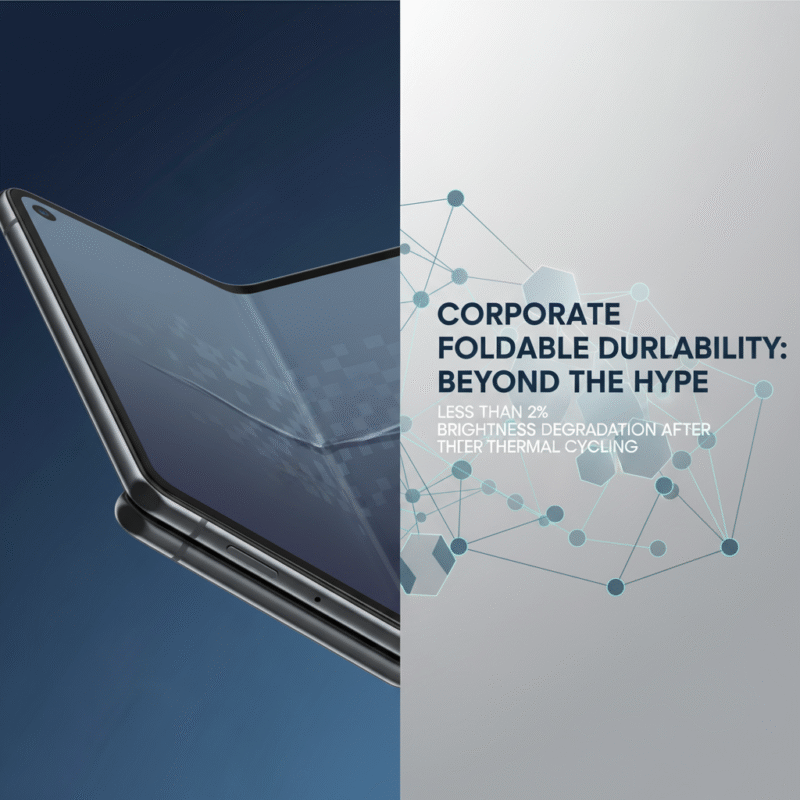
Manufacturers simulate extreme real-world conditions like -20°C cold storage or +60°C heat exposure while continuously folding displays over 100,000 times during testing cycles.
According to DisplayMate’s Q1 2024 report, “The latest foldables show less than 2% brightness degradation after thermal cycling—a clear sign of maturing panel technologies.”
This level of resilience stems from rigorous stress testing, optimized lamination processes, and better sealing around hinges—all crucial when your device needs to survive corporate travel across continents.
If you’re looking for something that won’t flinch under pressure? Brands like screen-stocks have baked durability into every layer—from outer shell to internal wiring—so you can focus on work instead of worrying about cracks or creases in your display-driven workflow.
Field Sales: Rugged Folding Screen Phone Use
Built for the grind, tested on the road—this is how folding screen phone tech proves its worth in real-world field sales chaos.
Wide Color Gamut AMOLED Panels in Harsh Environments
• Deep reds, crisp blues, and true blacks stay vivid even when it’s freezing or scorching out.
• AMOLEDs handle dust storms, desert heat, and warehouse humidity like champs.
• The panel tech resists image burn-in during long CRM sessions under static UI layouts.
You’ll get better color fidelity while using mobile CRM, even if you’re sweating through a desert pitch or freezing at a mountaintop inventory check-in. These panels are designed to keep critical visuals clear when you’re juggling data capture and client interaction on the fly—because no one wants washed-out dashboards during a crucial client visit.
Sunlight Readable 7.1-inch Foldable Screens for Outdoor Sales
The large fold-out display doesn’t just look cool—it works hard too:
- Brightness levels hit over 1000 nits, so glare doesn’t kill your pitch at noon.
- Anti-reflective coatings reduce mirror-like reflections when standing under direct sunlight.
- Adaptive brightness helps save battery while still keeping things visible.
- The aspect ratio adjusts automatically depending on whether you’re scanning barcodes or reviewing order forms.
- Folded mode gives you quick-glance access to inventory tracking without unfolding everything.
- Even with gloves on, touch response remains accurate thanks to pressure-sensitive layers.
That means fewer fumbles during outdoor demos and faster client interactions—all while handling the wear-and-tear of daily field sales hustle.
ZIF and Ribbon Cable Connectors for Rapid Field Repairs
| Component | Connector Type | Avg Repair Time | Tool Required |
|---|---|---|---|
| Display Panel | ZIF | ~10 min | None |
| Touch Layer | Ribbon | ~15 min | Micro pry tool |
| Battery Lead | Ribbon | ~12 min | Tweezers |
| Hinge Sensor | ZIF | ~8 min | None |
When you’re miles from a repair center, being able to swap out a damaged screen with minimal tools is gold—especially for reps deep into rural territory managing last-mile delivery routes or fast-paced order management updates via their ruggedized devices.
Anti-Glare Coatings and High Brightness Displays
• Matte nano-layer coating reduces ambient light scatter by up to 65%.
• Peak brightness hits beyond standard LCDs—ideal for windshield-mounted setups inside vehicles.
• Combined with circular polarizers, screens remain readable even through polarized sunglasses.
• Built-in auto-adjustment lets your display shift contrast dynamically based on UV intensity outdoors.
Whether you’re logging deliveries at sunrise or updating customer info outside a hardware store at noon, these screens don’t flinch—even if your hands are full juggling comms gear and an open crate of samples used in real-time data collection workflows across multiple territories using advanced communication tools integrated into the device platform.
These aren’t just flashy upgrades—they’re field-tested essentials that make every tap count when time is tight and conditions are rougher than expected.
FAQs about Folding Screen Phone
What screen materials hold up best for folding screen phone durability in bulk orders?
Durability isn’t just a checkbox—it’s survival. In the world of foldables, the material makes or breaks the experience. Some options rise above:
- Ultra Thin Glass (UTG): Feels like real glass because it is—just thinner than a strand of hair. It resists scratches and delivers that satisfying glide under your fingertips.
- CPI film: More forgiving to drops and bends, this polymer layer flexes without cracking—a favorite for large-scale deployments where accidents are inevitable.
- Flexible polymers: Lightweight and bend-happy, these are built to take abuse while keeping things light enough for pocket travel.
Each choice reflects a balance between elegance and endurance.
How do MIPI DSI connectors improve integration when deploying folding screens at scale?
It’s not just about plugging things in; it’s about making sure everything talks fast—and doesn’t drain power doing it. MIPI DSI connectors offer high-speed data lanes with minimal energy draw. That means crisp visuals on every unit across hundreds—or thousands—of devices, all humming along efficiently without dragging down battery life.
For IT teams rolling out fleets of foldable phones, this connector becomes an unsung hero: low-profile but essential.
Which display features help save power across many folding screen phones?When you’re managing hundreds of units in constant use, saving battery isn’t optional—it’s mission-critical:
- AMOLED panels: Only light what you need; black pixels stay off entirely.
- Adaptive refresh rates: The screen adjusts itself depending on activity—fast when scrolling, slow when reading.
- Low-power FPC connections: These slim circuits keep internal communication efficient without wasting charge.
These aren’t flashy upgrades—they’re quiet workhorses that stretch every milliamp hour further than expected.
Why does anti-glare coating matter so much outdoors on folding screens?Sunlight doesn’t care if you’re trying to close a deal or read directions—it floods your view either way. Anti-glare coatings scatter harsh reflections before they blind you. On larger 7-inch displays used by mobile teams outside office walls, this small detail transforms usability from frustrating squint-fest into smooth interaction—even under midday sun.
It’s not luxury; it’s visibility when it counts most.
Can I choose different connector types when ordering lots of displays?Yes—and having choices here changes everything during assembly:
- ZIF connectors: Quick-snap installation speeds up production lines dramatically.
- MIPI DSI cables: Perfect for high-res performance needs with tight space constraints.
- FPC ribbons: Flexible layouts make them ideal for compact internals where curves matter more than straight lines.
Choosing the right connection type can mean fewer delays during rollout—and fewer headaches later during maintenance or upgrades.




Recent Comments