

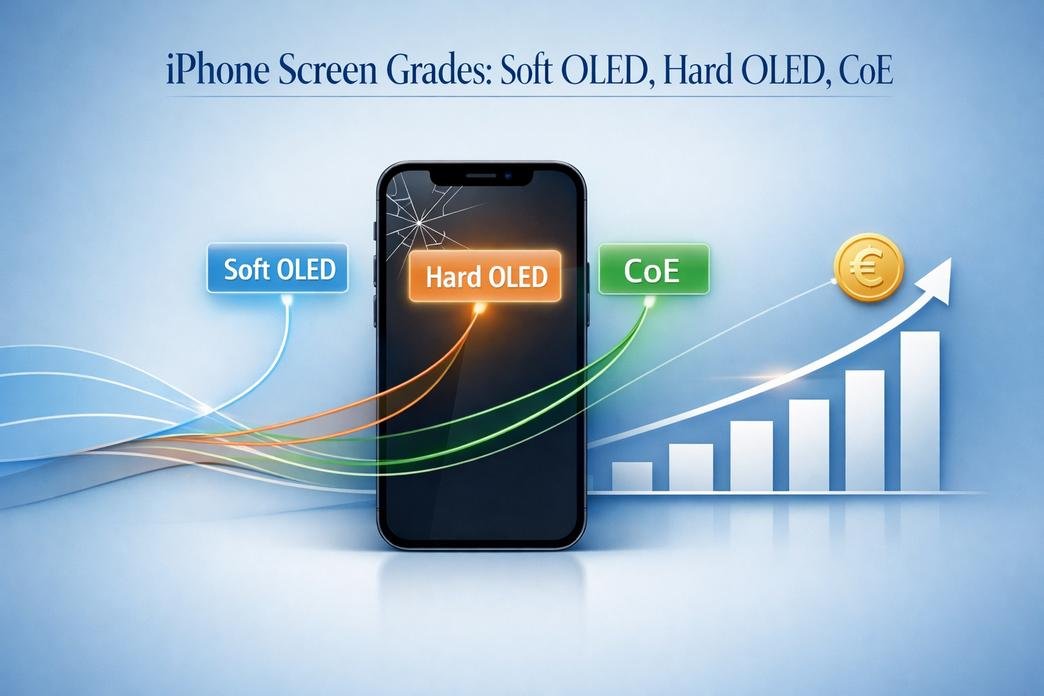
One wrong batch in iPhone screen wholesale can blow your margins—decode the OLED alphabet soup before profit turns to pain.
In the fast-moving world of iPhone screen wholesale, one bad batch can hit like a blown tire on the freeway—sudden, expensive, and impossible to ignore. Soft OLED, Hard OLED, CoE labels… it’s starting to feel like alphabet soup, but your margins depend on reading the fine print.
Screen grades aren’t just tech specs; they’re profit or pain. Pick the wrong tier and you’re stuck with color shifts, ghost touch, or returns stacking up like unopened mail.
Global smartphone shipments reached 1.17 billion units in 2023, according to IDC. “Aftermarket demand closely follows active device cycles,” IDC notes. Translation? The repair market is big—and picky.
This guide cuts through the noise so you can buy smart, protect your reputation, and stop gambling on glass.
Key Points to Consider in iPhone Screen Wholesale
- Screen Specifications: Choosing between Soft OLED and Hard OLED affects durability, performance, and cost. Soft OLED panels offer better flexibility and shock absorption, while Hard OLED panels are more rigid but often cheaper in bulk.
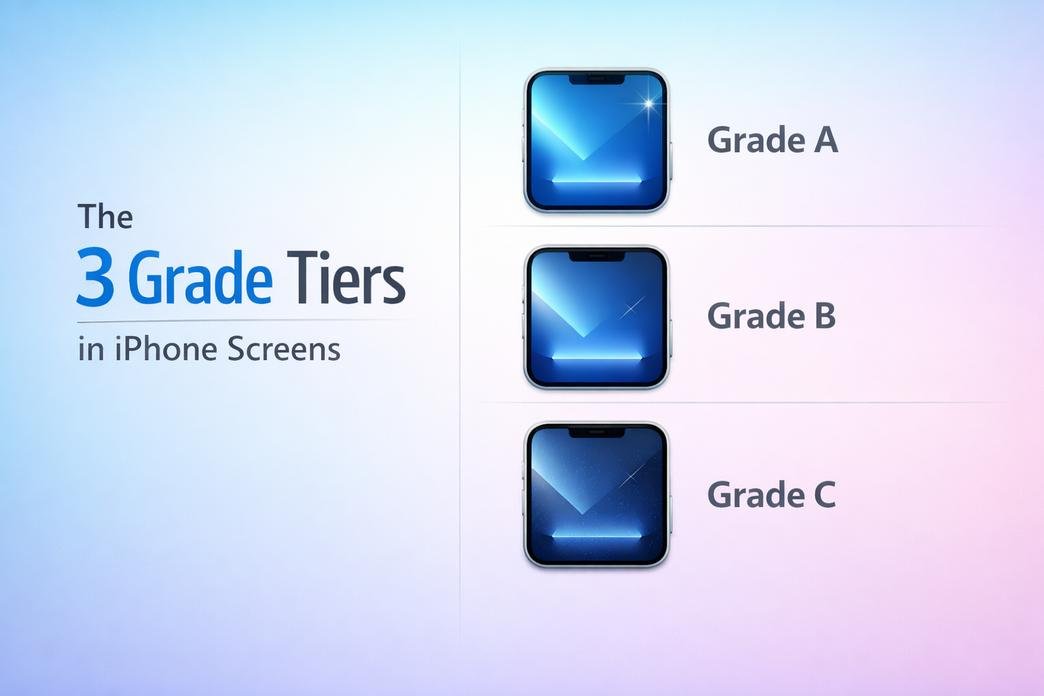
- Grade Tiers Matter: Grade A screens are factory-tested and meet strict OEM specifications, ensuring superior quality. Grade B screens are slightly less perfect but still meet functional standards. Grade C screens are cost-effective but may have cosmetic flaws or dead pixels.
- The Invisible Cost of Wrong Screen Grades: A poor-quality screen batch can lead to excess inventory, increased returns, and damage to your reputation. Proper grade selection is key to reducing risks and managing costs effectively.
- Pricing and Market Demand: Bulk purchasing can reduce per-unit costs but requires careful demand forecasting to avoid overstock. Market shifts, like new iPhone launches, can influence screen wholesale prices and margins.
- Risks to Avoid: Be mindful of issues like flex cable faults, poor adhesive strips, and unverified backlight assemblies, which can lead to defective products, costly repairs, and customer dissatisfaction.
- CoE Standards for 2026: CoE-certified OLED panels offer superior color accuracy and streamline customs clearance, ensuring smoother logistics and meeting industry trends for high-quality replacement parts.
Soft OLED vs Hard OLED: The Real Difference
When sourcing for iPhone screen wholesale, the Soft OLED and Hard OLED choice hits different. For buyers handling iPhone screens at scale, knowing how material, display resolution, and durability stack up can seriously affect margins, return rates, and customer vibes. Let’s break it down in a practical way.
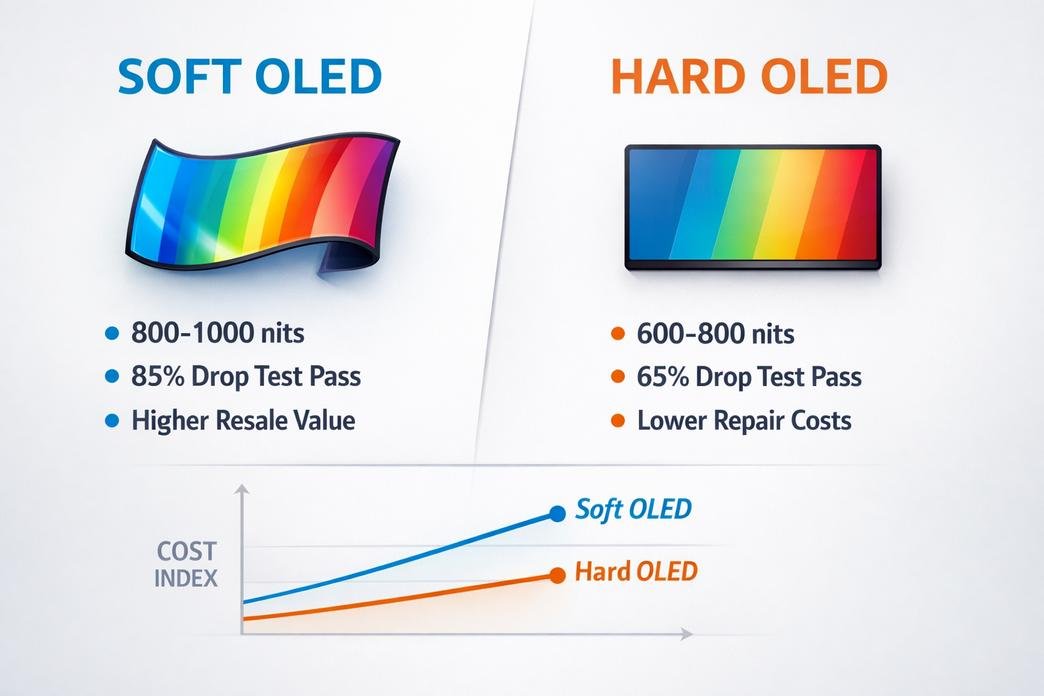
Soft OLED
When dealing with iPhone screen wholesale, Soft OLED usually sits in the premium lane.
1) Material Structure
- Core: plastic substrate
- Result: better shock absorption
- Impact: fewer cracks during shipping in bulk iPhone screen orders
2) Performance Layer
- a. Display resolution stays sharp at high pixel density
- b. Strong color accuracy and deep contrast ratio
- c. Stable brightness levels with wide viewing angles
3) Functional Integrity
- ① Smooth touch responsiveness
- ② Lower risk of digitizer issues
- ③ Preserved true tone functionality
For shops buying wholesale iPhone screens, this means:
- Better user experience
- Higher resale value
- Fewer warranty headaches
Soft OLED is thinner, bends slightly under stress, and handles daily drops better. For suppliers like phone-stocks serving serious iPhone screen wholesale clients, Soft OLED often aligns with higher market demand and stronger device longevity expectations.
Hard OLED
Hard OLED dominates budget-driven iPhone screen wholesale orders.
1) Structural Base
- Glass substrate
- Lower production cost
- More fragile under impact
2) Quality Metrics Comparison
| Feature | Soft OLED | Hard OLED |
|---|---|---|
| Avg. Brightness (nits) | 800–1000 | 600–800 |
| Break Resistance (Drop Test %) | 85% pass | 65% pass |
| Bulk Cost Index (1–10) | 8 | 5 |
3) Grading & Value Impact
- a. Higher risk of dead pixels
- b. Possible backlight bleeding
- c. Faster wear of oleophobic coating
For buyers focused on screen wholesale margins, Hard OLED reduces upfront repair costs, yet may affect trade-in value and long-term device value.
In large-scale iPhone screen wholesale, the choice is simple: pay more for durability and performance, or save now and manage higher return risks later.
The 3 Grade Tiers in iPhone Screens
When sourcing through iPhone screen wholesale, buyers quickly notice that not all displays hit the same bar. In the iPhone screen wholesale market, grading affects resale market pricing, consumer perception, and long-term device performance. If you handle iPhone screens wholesale or search for wholesale iPhone screens daily, understanding these tiers keeps margins healthy and callbacks low. Let’s break it down in plain talk.
Grade A Quality: Factory Tested Retina Display
Within the iPhone screen wholesale ecosystem, Grade A sits at the top due to strict industry standards and tight certification processes.
- Core Performance
- Pixel integrity: near-zero defect tolerance
- Color accuracy: aligned with original Retina calibration
- Touch responsiveness: fast multi-touch response
- Inspection Framework
- Advanced assessment methodologies
- Documented visual inspection points
- Verified performance benchmarks
- Value Impact
- Higher trade-in value
- Stronger warranty implications
- Better longevity expectations
For suppliers like phone-stocks, Grade A in iPhone screen wholesale means stable return rates and premium positioning in wholesale iPhone screens.
Grade B Standard: OEM Specifications & Functional Testing
Grade B balances cost and reliability in the iPhone screen wholesale flow.
- Functional Layer1.1 Stable digitizer response1.2 Reliable force touch feedback1.3 Confirmed functionality check
- Cosmetic Review2.1 Minor blemish assessment findings2.2 Controlled scratch depth limits2.3 Acceptable display condition variation
- Market Position3.1 Competitive resale market fit3.2 Solid repairability index score3.3 Smart choice for bulk iPhone screen orders
phone-stocks moves significant iPhone screen wholesale volume in this tier because it keeps balance without cutting corners.
Grade C Value: Cosmetic Condition & Dead Pixel Policy
Grade C in iPhone screens wholesale focuses on budget-driven demand.
- Visual Status
- Noticeable cosmetic wear
- Limited dead pixel policy allowance
- Lower durability metrics
- Business Use
- Ideal for refurbishment business
- Cost-sensitive service center repairs
- Flexible component sourcing options
- Buyer Considerations
- Reduced upfront cost
- Adjusted consumer perception
- Moderate impact on trade-in value
For shops buying iPhone screen wholesale at scale, Grade C works when price matters most. With clear grading and steady supply, phone-stocks helps buyers match screen quality to real-world demand without the guesswork.
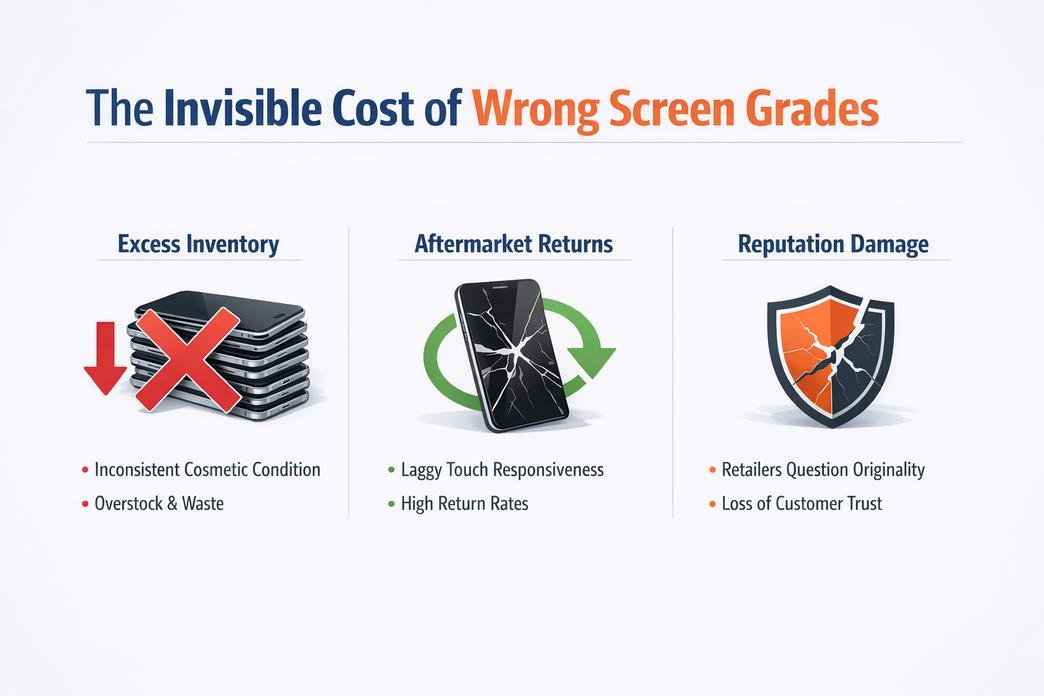
The Invisible Cost of Wrong Screen Grades
Bulk buyers in the iPhone screen wholesale market often focus on price tags and skip the fine print. That shortcut stings later. From iPhone screen wholesale contracts to daily iPhone screens wholesale shipments, grading mistakes quietly eat margins and trust.
Excess Inventory Management from Failed Batches
In the iPhone screen wholesale trade, failed batches usually trace back to loose Grading Criteria and Standards.
- Root Causes1.1 Inconsistent cosmetic condition checks1.2 Weak testing protocols on functional integrity1.3 Missing records on repair history
- Operational Impact2.1 Overstocked LCD and OLED units with unstable brightness levels2.2 Capital frozen in panels with poor color accuracy2.3 Warehouse strain from mixed display resolution tiers
- Financial Consequences3.1 Lower resale value3.2 Faster depreciation rate3.3 Distorted demand forecasts for iPhone screen wholesale cycles
Suppliers like phone-stocks tighten batch audits before shipping iPhone screen wholesale orders, reducing dead stock and keeping turnover clean.
Aftermarket Parts Returns Burden Service Centers
Return waves in iPhone screen wholesale channels often follow weak screen grading.
- Quality Gaps1.1 Laggy touch responsiveness1.2 Uneven contrast ratio1.3 Narrow viewing angles
- Service Chain Reaction2.1 Repeated repairs cut technician hours2.2 Shipping costs stack up across regions2.3 Warranty disputes tied to unclear warranty coverage
- Market Ripple3.1 Lower trade-in value for repaired devices3.2 Decline in consumer confidence
phone-stocks supports repair shops buying iPhone screen wholesale stock with verified grading reports, easing return pressure across wholesale iPhone screens networks.
Reputation Damage Across Reseller Networks
In the iPhone screen wholesale ecosystem, reputation moves faster than freight.
- Trust Breakdown1.1 Retailers question originality of components1.2 Insurance partners doubt certification process1.3 Online sellers highlight inconsistent performance metrics
- Value Erosion2.1 Falling market demand2.2 Shortened product longevity2.3 Negative consumer perception
- Long-Term Risk3.1 Reduced orders in future iPhone screen wholesale contracts3.2 Lost positioning as premium supplier
Smart buyers in iPhone screen wholesale circles now prioritize verified grading and transparent sourcing. That’s how phone-stocks keeps reseller networks steady while the broader iPhone screen wholesale market stays competitive.
iPhone Screen Wholesale Pricing Logic Decoded
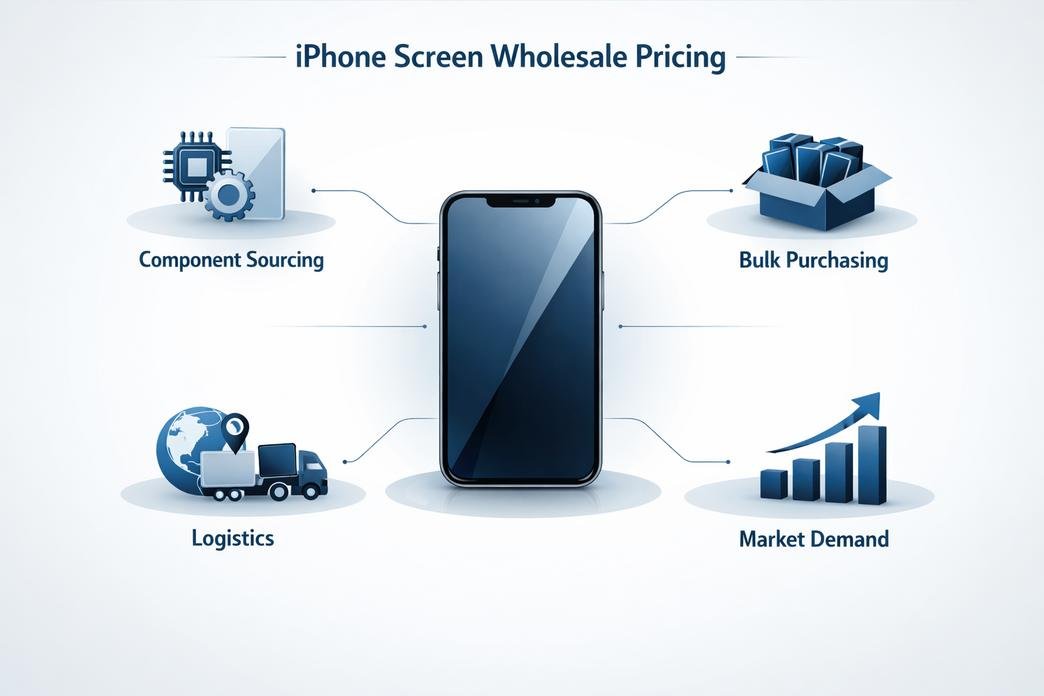
The world of iPhone screen wholesale moves fast, and margins can shrink overnight. If you’re sourcing iPhone screens at scale, small cost shifts matter. From OLED sourcing to shipping fees, every detail shapes your iPhone screen wholesale profit game.
Component Sourcing and Competitive Landscape
In the iPhone screen wholesale trade, sourcing breaks down into layered cost drivers:
- Core Display Components1.1 OLED Panels
- display resolution and pixel density directly raise panel pricing.
- Higher brightness levels and tighter contrast ratio control mean premium sourcing contracts.
- Touch IC impacts touch responsiveness and refresh rates.
- Driver IC quality affects color accuracy and long-term stability.
- Poor bonding reduces digitizer performance.
- Inferior materials hurt durability enhancements.
- Competitive Supply Dynamics2.1 Factory Tiering
- Tier-1 factories: stable yield, higher base quotes.
- Tier-2 factories: aggressive pricing for iPhone screen wholesale bulk buyers.
- OLED advancements push cost efficiency.
- Early micro-LED development still carries premium risk.
Reliable suppliers like phone-stocks track these shifts daily, helping buyers lock smarter iPhone screen wholesale deals.
Bulk Purchasing Discounts vs. Unit Cost
Bulk strategy inside iPhone screen wholesale isn’t just “buy more, pay less.” It runs deeper:
- Volume Tiers1.1 100–499 units → mild discount1.2 500–1999 units → sharper unit drop1.3 2000+ units → negotiated iPhone screen wholesale contract pricing
- Risk Balancing
- Overstock reduces cash flow.
- Fast model turnover affects market demand.
- Screen grade impacts resale value and trade-in value.
- Quality Grading Impact
- A-grade: strong functional integrity, no dead pixels, clean backlight uniformity.
- B-grade: light scratches, minor pressure marks.
- C-grade: visible cracks, reduced device lifespan.
Smart forecasting keeps your iPhone screen wholesale margins steady while protecting user experience and repair costs.
Logistics Solutions and Customs Clearance Fees
Landing cost in iPhone screen wholesale often hides in transit layers:
- Shipping Mode
- Air freight: faster, higher per-unit freight.
- Sea freight: slower, better for large iPhone screen wholesale loads.
- Customs Breakdown2.1 HS code classification2.2 Import duty rate2.3 VAT or regional tax
- Hidden Operational Costs
- Storage during clearance
- Repack compliance checks
- Insurance against transit damage
Phone screen wholesale buyers who streamline paperwork cut delays and protect warranty implications tied to shipping damage.
Market Demand Fluctuations Impacting Margins
iPhone screen wholesale pricing reacts fast to timing.
- Product Launch Cycles
- New iPhone drop → spike in repair volume.
- Older models → stable aftermarket iPhone display wholesale flow.
- Consumer Behavior
- High repair costs increase replacement demand.
- Better viewing angles and smoother touch drive premium screen upgrades.
- Technology Trends
- Foldable screens influence future sourcing models.
- Under-display cameras and higher refresh rates change panel cost structure.
Staying close to real-time data keeps your iPhone screen wholesale edge sharp instead of scrambling when supply tightens.
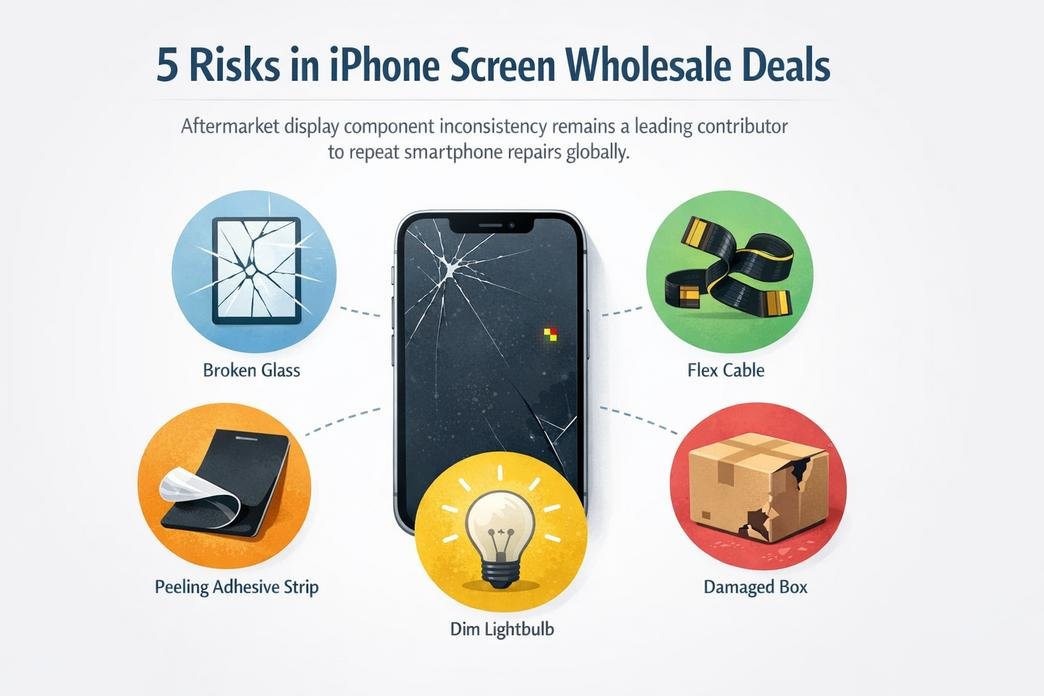
5 Risks in iPhone Screen Wholesale Deals
In the fast-moving iPhone screen wholesale market, a cheap deal can flip into a costly headache overnight. Buyers chasing iPhone screen wholesale pricing often overlook quality flags. From iPhone display wholesale batches to bulk iPhone screens, knowing the hidden risks keeps your margins safe and your customers happy.
Substandard Touchscreen Glass Failures
When sourcing through iPhone screen wholesale channels, glass quality directly impacts display quality and long-term durability.
- Core Risk Areas
- Surface Strength
- Low compression resistance
- Higher chance of cracked glass during installation
- Coating Integrity
- Weak oleophobic layers
- Faster cosmetic wear affecting cosmetic condition
- Operational Impact
- Increased returns
- Poor user experience
- Lower resale value
In bulk iPhone screens, weaker glass often passes visual checks but fails under light drops. For shops handling iPhone display wholesale orders, this means more rework and unhappy walk-ins.
Flex Cable Faults Leading to Dead Pixels
Flex cable issues are common in unstable iPhone screen wholesale lots.
- Signal Disruption1.1 Loose bonding1.2 Connector misalignment
- Visual Defects2.1 Dead pixels2.2 Flickering tied to pixel integrity
- Functional Problems3.1 Reduced touch responsiveness3.2 Hidden functional defects
A 2025 IDC mobile repair outlook noted:
“Aftermarket display component inconsistency remains a leading contributor to repeat smartphone repairs globally.”
In short, cheap iPhone screen wholesale pricing can quietly hurt reliability.
Inconsistent Adhesive Strips Causing Lifted Edges
Adhesive quality affects more than fit.
- Seal Performance
- Uneven bonding
- Dust intrusion
- Edge lifting
- Longevity
- Shortened device lifespan
- Weakened frame support
For iPhone screen wholesale buyers, poor adhesive strips create subtle gaps. Days later, screens lift. Weeks later, complaints roll in.
Unverified Backlight Assemblies Affecting Brightness
In LCD-focused iPhone display wholesale supply:
- Backlight Layer
- Irregular diffusion
- Uneven backlight consistency
- Visible light leakage
- Color Output
- Distorted color accuracy
- Patchy brightness zones
These issues hurt visual appeal and real-world performance metrics, especially in bright environments.
Poor Warehousing Facilities Damaging Panels
Storage can quietly destroy even decent iPhone screen wholesale stock.
- Environmental Exposure
- Moisture
- Internal corrosion
- Subtle discoloration
- Pressure stacking
- Pressure marks
- Micro fractures
- Risk Control
- Climate-managed storage
- Protective slot packaging
- Verified suppliers like phone-stocks
Smart buyers in the iPhone screen wholesale space don’t just compare price tags. They check handling, grading, and storage. That’s how you protect durability, maintain strong display quality, and keep your repair business running smooth.
Why CoE Matters in 2026 Procurement
In 2026, buyers in iPhone, screen, and wholesale markets care about more than price. For anyone sourcing iPhone screen wholesale, CoE standards quietly shape quality, speed, and long-term margin control.
Superior Color Accuracy on OLED Panels
When handling iPhone screen wholesale, procurement teams usually break evaluation into layered checks tied to CoE compliance.
- Core Display Metrics1.1 display quality measured against OEM baselines1.2 color accuracy tuned to OLED calibration targets1.3 backlight uniformity tested under dark-room inspection
- Functional Verification2.1 pixel integrity scan to detect dead pixels or micro-faults2.2 touch responsiveness grid testing for edge precision2.3 Full functionality tests aligned with retina benchmarks
- Grading Alignment3.1 Mapping to grade A, premium grade, or refurbished quality3.2 Filtering out units with burn-in, discoloration, or scratches
For bulk buyers in the iPhone screen wholesale trade, tighter OLED calibration means fewer returns and stronger resale value. Teams working with phone-stocks often prioritize panels that pass layered CoE screening because corporate IT clients notice even small color shifts.
Alignment with Industry Trends for Replacement Parts
In the iPhone screen wholesale ecosystem, traceability now drives purchasing decisions.
- Supply Chain Traceability1.1 Serialized tracking for each iPhone screen1.2 Verified sourcing for replacement display units1.3 Documentation supporting customs audits
- Grading Transparency2.1 Clear labeling: grade B, standard grade, economy grade2.2 Disclosure of cosmetic condition and prior repairs2.3 Notes on cracked glass, water damage, or touch issues
- Market Impact3.1 Stronger resale value in secondary channels3.2 Longer device lifespan through quality parts3.3 Better warranty implications for refurbishers
The iPhone screen wholesale market is shifting toward documented compliance. Buyers sourcing iPhone screens wholesale in volume prefer suppliers like phone-stocks that align with traceable replacement parts trends.
Streamlined Customs Clearance Through CoE Standards
Customs delays can crush margin in iPhone screen wholesale deals, so CoE paperwork is not just admin work.
- Documentation Framework1.1 Standardized CoE certificates1.2 Harmonized product coding for iPhone display shipments1.3 Batch-level inspection summaries
- Risk Reduction2.1 Lower rejection rates for display consignments2.2 Fewer inspections tied to unclear screen grading criteria2.3 Reduced disputes over functionality tests results
- Operational Results3.1 Faster turnover in iPhone screen wholesale cycles3.2 Improved performance consistency across lots3.3 Higher buyer confidence in iPhone screen wholesale contracts
For teams deep in iPhone screen wholesale, smooth clearance means cash flow stays healthy. And in 2026, that edge really counts.
FAQs about Iphone screen wholesale
What is the difference between Soft OLED and Hard OLED in iPhone screen wholesale?
In iPhone screen wholesale, choosing between Soft OLED and Hard OLED affects both profit and reputation.
Soft OLED (plastic substrate)
- Slim digitizer assembly with better shock absorption
- Closer to original retina display performance
- Preferred by corporate IT departments and high-end service centers
Hard OLED (glass substrate)
- Lower bulk purchasing cost
- More fragile touchscreen glass
- Popular with budget-focused repair shops
Quick comparison
| Item | Soft OLED | Hard OLED |
|---|---|---|
| Substrate | Flexible | Rigid |
| Durability | Higher | Moderate |
| Price Level | Higher | Lower |
| Target Buyers | Premium reseller network | Cost-driven distribution channel |
The decision often follows market demand and the competitive landscape in replacement parts.
How do screen grade tiers impact reseller margins and trust?
Grades define risk. Risk defines margin.
1) Grade A quality
- Factory tested under strict OEM specifications
- Near-zero dead pixel policy
- Stable force touch and haptic engine response
- Ideal for electronics retailers and insurance companies
2) Grade B standard
- Minor cosmetic condition tolerance
- Passed core functional testing
- Balanced option for independent repair shops
3) Grade C value
- Visible flaws allowed within policy
- Suited for refurbishment business models
- Higher return probability if expectations are unclear
Low-grade aftermarket parts can damage a reseller network quickly—dead pixels, weak backlight assembly, unstable display connector issues. Strong quality control protects long-term credibility more than short-term savings.
Why do logistics and warehousing matter in iPhone screen wholesale?
Profit does not end at unit price. It lives in the supply chain.
Logistics pressure points
- Shipping container costs shift landed pricing
- Delays in customs clearance slow distribution channels
- Poor component sourcing documentation disrupts global supply
Warehousing risks
- Humidity corrodes flex cable and IC chip contacts
- Pressure damages touchscreen glass and frame bezel alignment
- Weak adhesive strips lose bonding strength
Disciplined inventory management and stable warehousing facilities protect OLED panels and LCD display stock from silent losses. For online parts suppliers and mobile device refurbishers, controlled logistics solutions mean fewer returns, stronger margins, and steadier relationships with service centers.







Recent Comments