

For repair shops, refurbishers, and parts distributors, iPhone battery wholesale is not only about finding the lowest unit price. A battery that looks cheap on the invoice can become expensive when it causes swelling, short runtime, warranty returns, customer complaints, or inconsistent installation results. High-quality iPhone replacement batteries protect your repair reputation, improve repeat business, and make stock planning easier across popular models.
This sourcing guide explains how repair businesses can evaluate iPhone battery suppliers, compare cell grades, check safety documentation, control incoming quality, and build a wholesale purchasing workflow that supports stable margins. It is written for professional buyers who need reliable replacement parts, practical inspection standards, and a supplier relationship that can scale with daily repair volume.
Why iPhone Battery Wholesale Quality Matters for Repair Shops
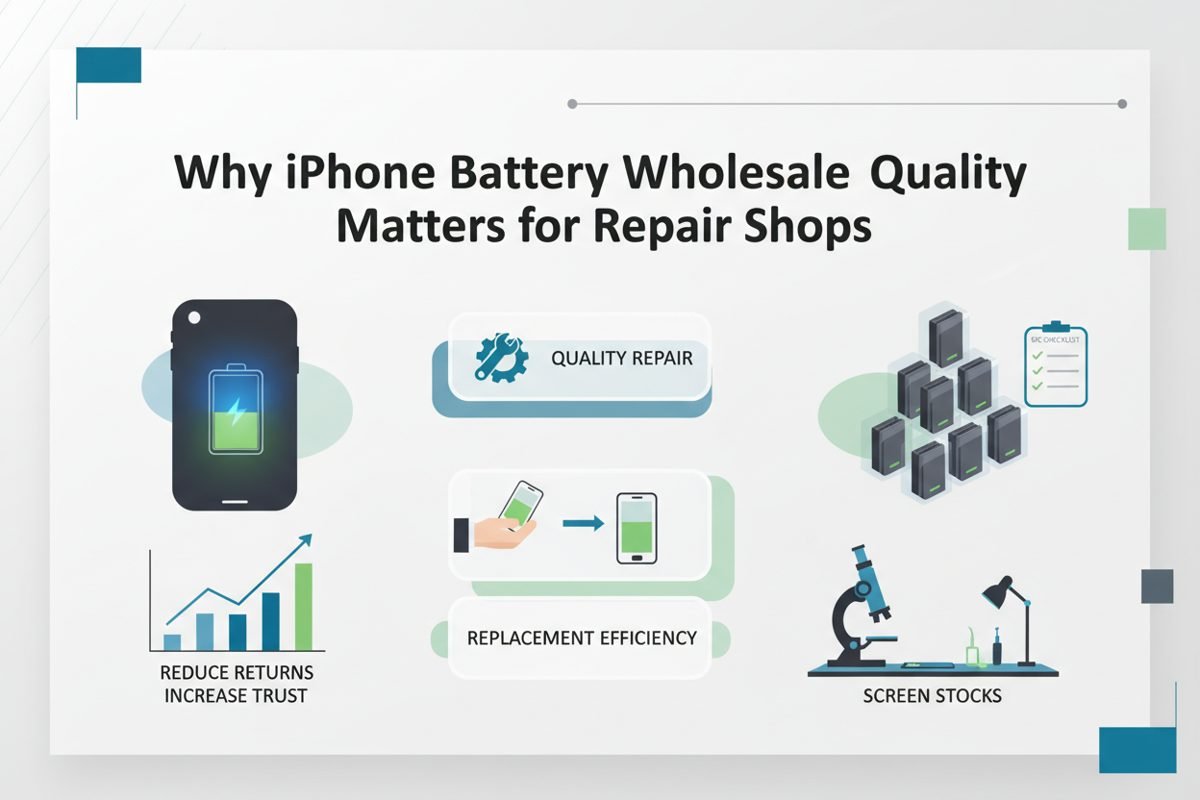
Battery replacement is one of the most common repair services, but it is also one of the easiest categories to damage customer trust. A weak battery may pass a quick power-on test, yet fail after several charge cycles. For repair businesses, every failed battery creates extra labor, reverse logistics, replacement cost, and reputational risk.
When sourcing wholesale iPhone batteries, buyers should think beyond capacity claims. A dependable battery program should deliver consistent cycle performance, stable voltage, clean flex cables, accurate model fit, safe packaging, and clear after-sales responsibility. The goal is not just to buy batteries; it is to reduce repair uncertainty.
- Lower return rate: consistent cells reduce comeback repairs and warranty claims.
- Faster installation: accurate fit and clean connector quality save technician time.
- Better customer satisfaction: stable runtime makes battery replacement feel immediately valuable.
- Safer inventory: compliant packaging and tested cells reduce storage and shipping risks.
Understand the Main Types of iPhone Replacement Batteries
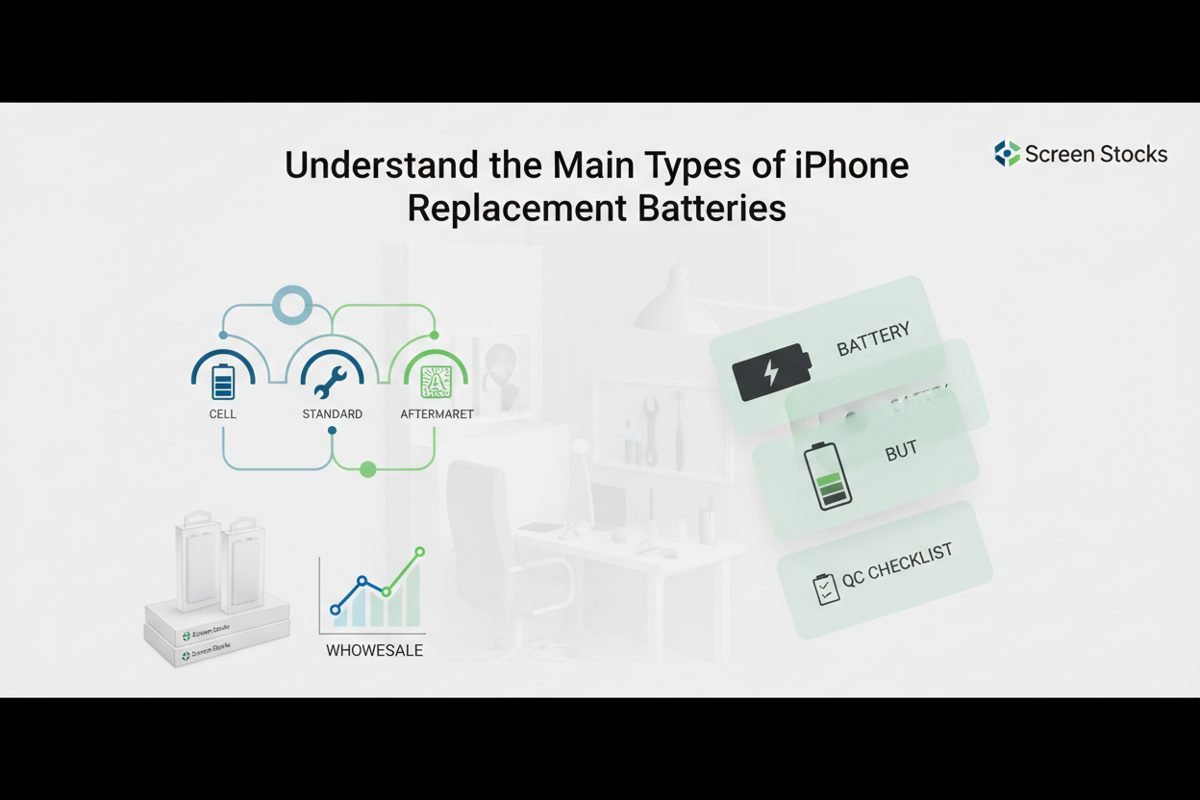
Wholesale suppliers may use terms such as original pull, OEM-grade, premium aftermarket, standard aftermarket, high-capacity, no-warning, or upgraded cell. These labels are not always standardized, so buyers need to define what each category means before placing a bulk order.
For most repair shops, a practical lineup includes a reliable standard battery for price-sensitive repairs and a premium-grade option for customers who value longer warranty or stronger performance. If a supplier offers high-capacity versions, verify whether the real measured capacity, cell thickness, and safety performance match the claim.
- Standard aftermarket: common choice for budget repairs; quality varies widely by factory.
- Premium aftermarket: better cell consistency, stronger QC, often suitable for shop warranty programs.
- Original refurbished/pulled: may be attractive but requires strict health and cycle verification.
- No-warning solutions: useful for some repair markets, but compatibility and compliance should be checked carefully.
Check Battery Certifications, Safety Data, and Compliance
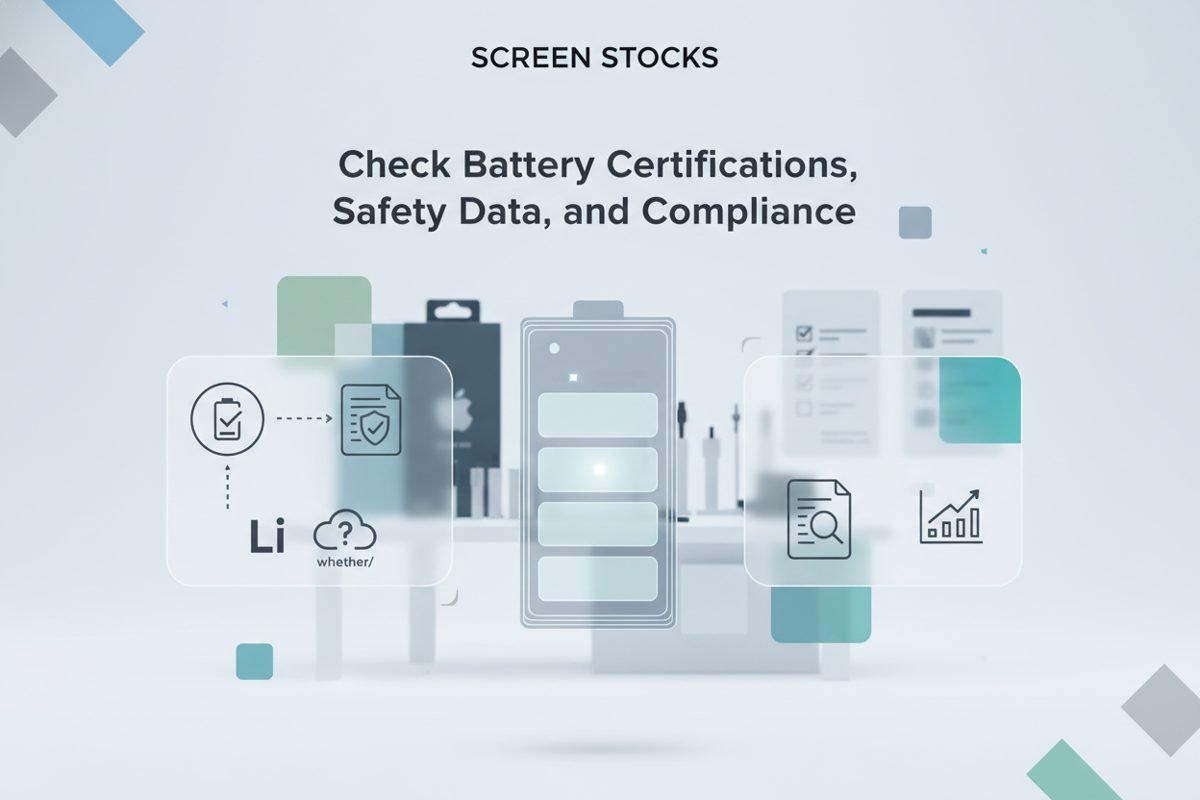
Professional iPhone battery wholesale purchasing should include documentation review. Lithium batteries are regulated products, and missing paperwork can create shipping delays, customs holds, or carrier refusal. At minimum, buyers should ask for UN38.3 test documentation, MSDS/SDS, appropriate transport labels, and clear packing information.
Documentation alone is not a guarantee of quality, but it shows whether the supplier understands battery handling and export requirements. If you ship internationally, confirm whether the supplier can support air, express, or sea routes for lithium batteries and whether the packaging meets the forwarder’s requirements.
- UN38.3 test summary or report for lithium battery transport.
- MSDS/SDS for battery safety information.
- Proper watt-hour, model, and label information when required.
- Export packaging details for cartons, inner trays, insulation, and short-circuit protection.
Evaluate Supplier QC Before You Place a Bulk Order
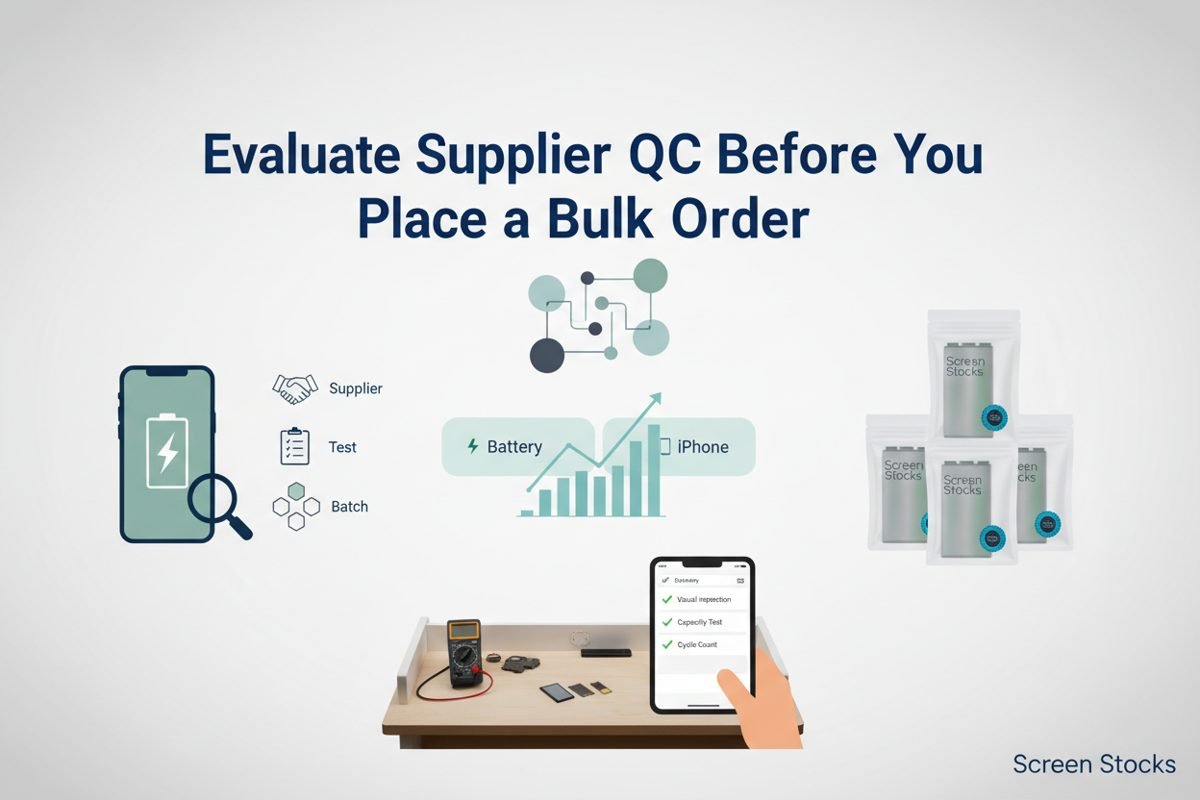
A strong iPhone battery supplier should be able to explain its quality-control process clearly. Ask how cells are selected, how finished batteries are tested, what capacity tolerance is accepted, whether internal resistance is checked, and how flex cables and connectors are inspected. Vague answers usually indicate weak control.
Before committing to large wholesale volume, request samples across your main iPhone models and test them under real repair conditions. Install samples, run charge-discharge checks, observe battery health behavior, and track customer-style usage. A small test batch can prevent a large purchasing mistake.
- Check capacity consistency against the claimed mAh range.
- Inspect connector alignment, adhesive quality, flex cable finish, and protective films.
- Test charging stability, standby drain, heat behavior, and cycle performance.
- Record failure patterns by model, batch number, and supplier lot.
Build a Model Coverage Plan for Wholesale Inventory
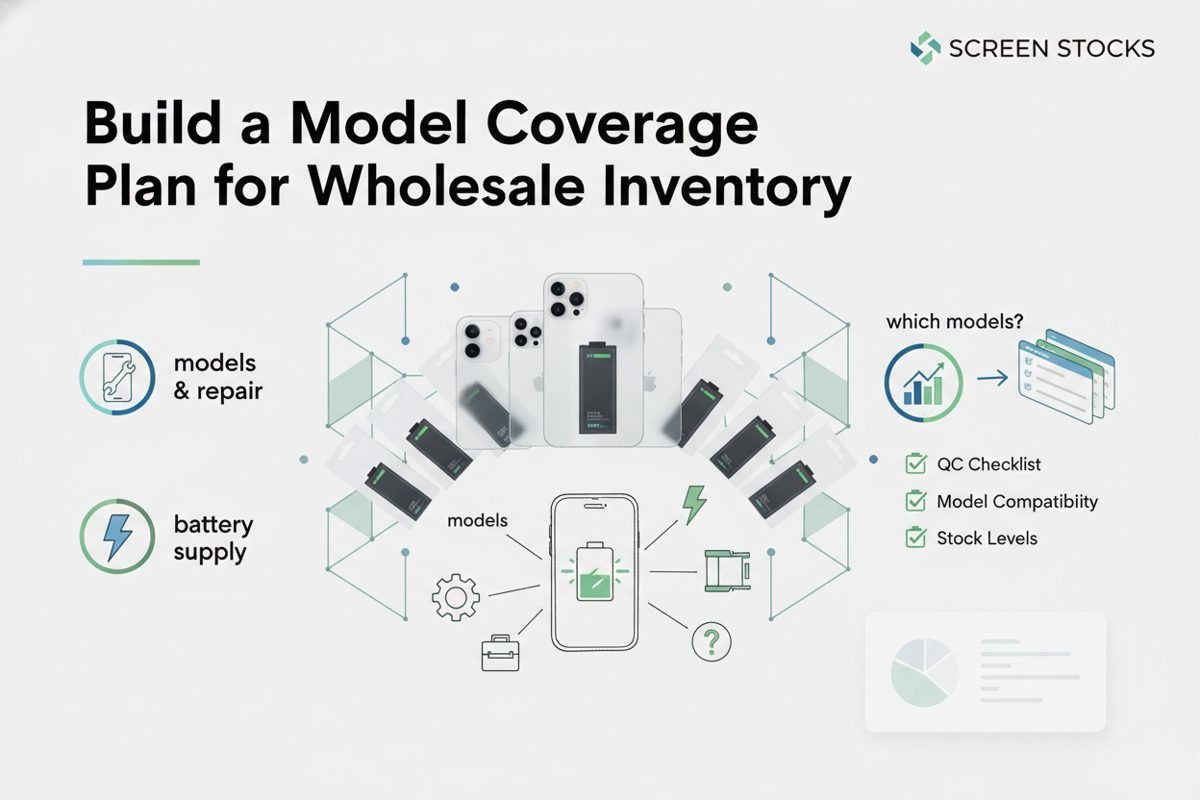
Repair businesses should not stock every iPhone battery in equal quantity. Demand usually concentrates around active repair models, older high-volume models, and local market preferences. A good sourcing plan balances availability with inventory aging risk.
Start with your repair records: which iPhone models come in most often, which batteries are hard to source quickly, and which models require premium quality because customers expect longer device life. Then set reorder points by model, lead time, and monthly usage. Wholesale buying becomes safer when the order is based on real movement rather than guesswork.
- Classify models into fast-moving, steady, low-volume, and special-order groups.
- Use monthly repair data to estimate reorder quantity.
- Keep safety stock for top models, especially before peak repair seasons.
- Avoid overstocking slow models where battery aging can reduce sellable quality.
Compare Price, MOQ, Warranty, and Real Total Cost
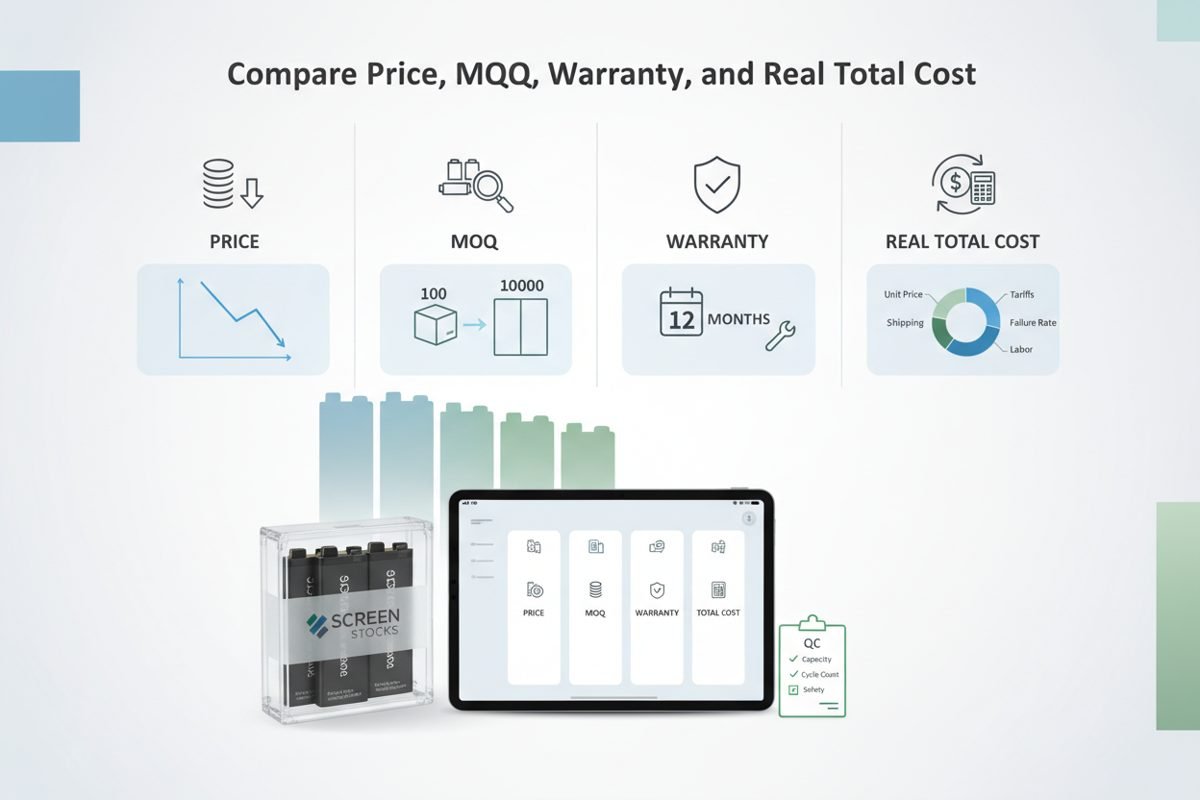
The cheapest iPhone battery wholesale quote is not always the best business decision. Compare total cost by including defect rate, warranty length, shipping method, payment terms, packaging, labeling support, and supplier response speed. A slightly higher unit price may produce better profit if it reduces returns and technician rework.
MOQ also matters. A low MOQ helps test a new supplier, while larger volume can unlock better pricing after quality is proven. Good suppliers are usually willing to start with a controlled sample or trial order, then scale pricing once the buyer has validated performance.
- Unit price: compare by model, grade, and included accessories.
- MOQ: check whether mixed-model orders are allowed.
- Warranty: define defect handling, credit notes, replacement terms, and evidence needed.
- Logistics: include lithium-battery shipping cost and delivery reliability.
Inspect Packaging, Labeling, and Shipping Readiness
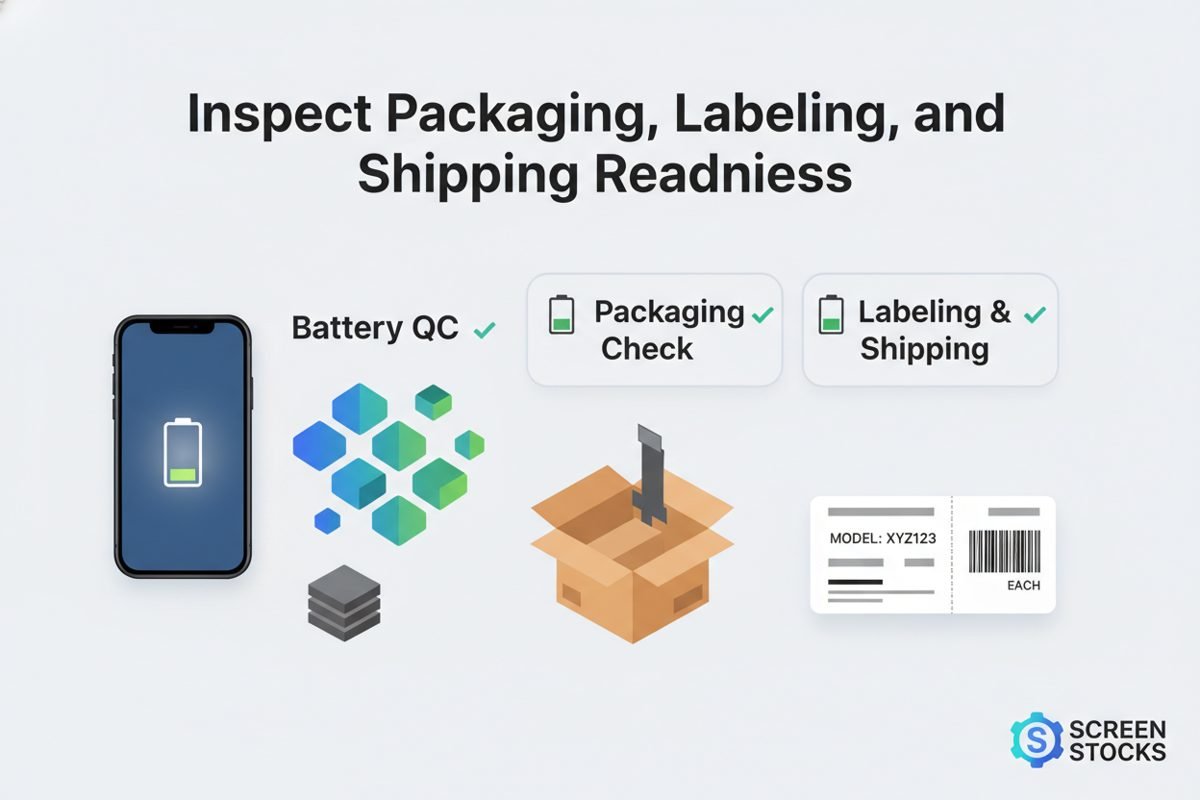
Battery packaging affects both safety and professional presentation. Each battery should be protected against pressure, puncture, and short circuit. For repair businesses, clean labels and model identification also reduce technician picking errors and save time at the workbench.
If you resell to other shops or manage multiple branches, ask whether the supplier can support custom labels, barcode stickers, model lists, carton marks, or neutral packaging. These small details make wholesale inventory easier to receive, store, and distribute.
- Individual protective packaging for each battery.
- Clear model labels to prevent installation mistakes.
- Carton-level packing list for receiving checks.
- Shipping method suitable for lithium battery rules.
How Screen Stocks Helps Repair Businesses Source Batteries
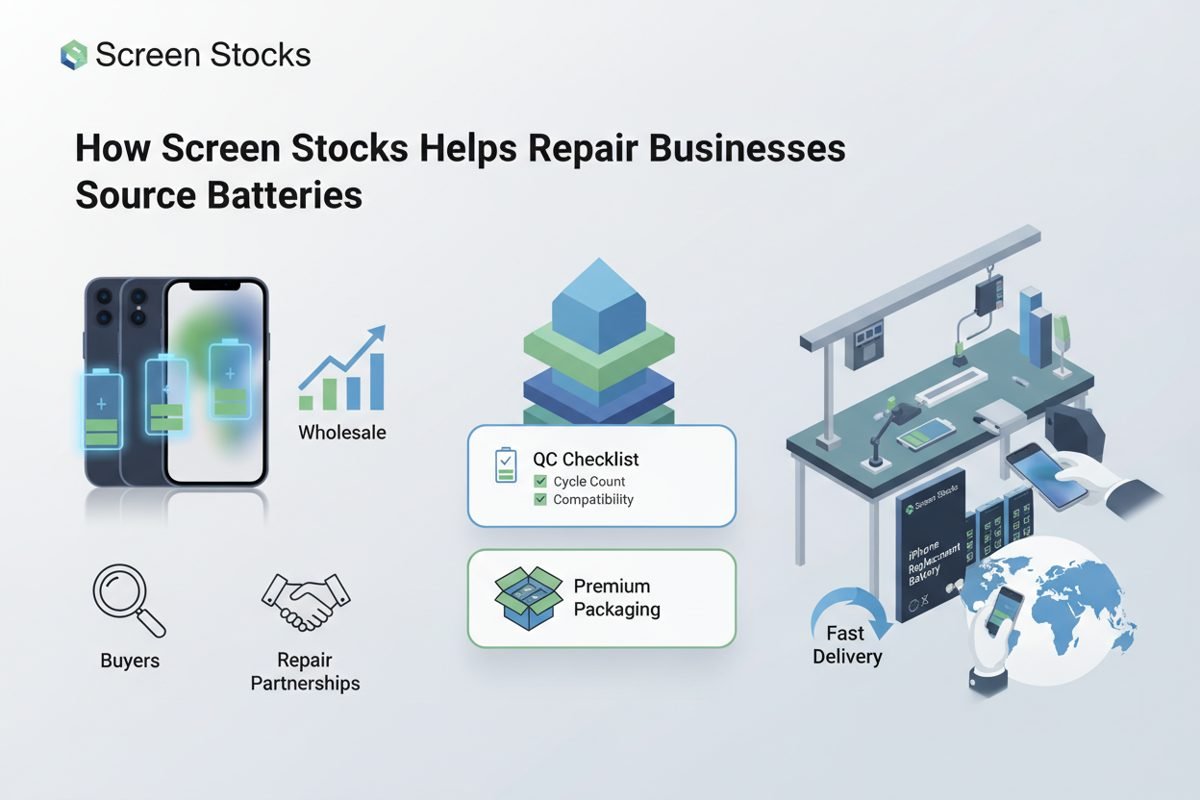
Screen Stocks supports repair shops and wholesale buyers that need dependable mobile repair parts, including replacement screens and related repair components. For iPhone battery wholesale projects, the sourcing approach should focus on practical QC, model coverage, packaging, and buyer-friendly order planning.
Whether you are testing a new battery line, adding high-demand iPhone models, or improving your repair shop’s warranty performance, a structured sourcing process helps you avoid random supplier risk. Screen Stocks can help buyers organize product requirements, compare quality levels, and plan stock for repair-business use.
- Model-based sourcing support for repair shop demand.
- Practical quality expectations for replacement parts buyers.
- Wholesale planning for mixed-model inventory.
- Packaging and shipping coordination for professional parts supply.
FAQ: iPhone Battery Wholesale for Repair Businesses
What should I check before buying iPhone batteries wholesale?
Check sample performance, real capacity, connector quality, fit, heat behavior, safety documentation, warranty terms, and packaging. Do not rely on price or mAh claims alone.
Is high-capacity always better?
Not always. High-capacity batteries must still fit correctly, charge safely, and perform consistently. Ask for measured capacity data and test samples before bulk purchase.
How can repair shops reduce battery warranty returns?
Use stable suppliers, test incoming batches, record lot numbers, avoid overstock aging, and choose battery grades that match your warranty promise.
What documents are important for shipping iPhone replacement batteries?
UN38.3 and MSDS/SDS are commonly requested for lithium battery transport. Requirements vary by shipping route and carrier, so confirm before shipment.
Should I buy from the cheapest supplier?
Only if the supplier can prove consistent quality. For repair businesses, defect rate and rework cost often matter more than the lowest quoted unit price.