

When your profits hinge on pixel perfection, choosing the right iPhone screen supplier is no love story—it’s survival with sparkle.
Picking the right iphone screen supplier in China can feel like dating in the dark—you’ve got glossy photos, sweet promises, and a price that looks too good to pass up. Then the shipment lands and half the batch flickers like a haunted house. For wholesalers, that’s not just annoying—it’s money slipping through your fingers and customers blowing up your inbox. China runs the global screen game, no question. But scale alone doesn’t guarantee consistency, and one shaky supplier can wreck a quarter’s profit.
Here’s the hard truth.
Low quotes are easy. Stable quality, clear warranties, and on-time freight? That’s the real jackpot. This guide cuts through the noise and shows you how to spot the partners who ship what they promise—so your margins stay healthy and your reputation stays squeaky clean.
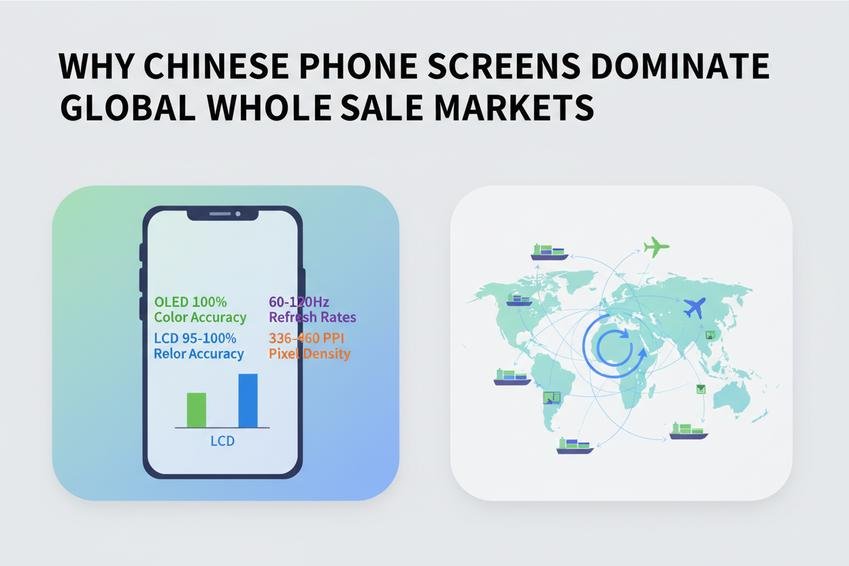
Why Chinese Phone Screens Dominate Global Wholesale Markets
Chinese manufacturers have quietly become the go-to iphone screen supplier for global buyers. From bulk iPhone display orders to custom builds, the mix of speed, price, and tech keeps wholesalers coming back.
Leveraging Scale: Manufacturing Capacity and Customization Options
Chinese factories stand out because of sheer manufacturing capacity and smart supply chain efficiency. For any serious iphone screen supplier, size matters—but so does flexibility.
- At the core:
- Massive production volume
- Multi-line assembly plants running 24/7
- Automated bonding and lamination systems
- Parallel QC stations reducing bottlenecks
- Strong economies of scale
- Bulk raw material sourcing
- Lower per-unit glass and OLED panel costs
- Shared tooling across iPhone screen models
- Massive production volume
- On customization:
- Wide customization options
- Logo printing for aftermarket brands
- Adjustable brightness calibration
- Frame color matching
- Flexible production
- Small-batch trial runs
- Mixed-model container loading
- Rapid mold switching
- Wide customization options
For wholesalers searching for an iphone screen supplier that can handle both 500 units and 50,000 units, this setup just makes sense. iphone screen factory partners like screen stocks align bulk output with tailored specs, which keeps repair chains and distributors stocked without drama. If you’re sourcing from an iPhone display supplier or comparing an iphone LCD supplier, scale plus flexibility is the real deal.
Cutting-Edge Panel Technology and Display Resolution Trends
Buyers care about clarity. End users care even more. That’s why panel technology keeps moving fast.
You’ll see upgrades across:
- OLED technology for deeper blacks and slimmer builds
- Advanced LCD technology for cost-sensitive repairs
- Higher refresh rates for smoother scrolling
- Improved color accuracy and sharper pixel density
Here’s a quick data snapshot often referenced by global iphone screen supplier audits:
| Panel Type | Typical Refresh Rates (Hz) | Pixel Density (ppi) | Color Accuracy (DCI-P3 %) |
|---|---|---|---|
| LCD (IPS) | 60–120 | 326–460 | 95–100 |
| OLED | 60–120 | 458–460 | 100 |
| LTPO OLED | 1–120 | 460+ | 100 |
| Aftermarket OLED | 60–120 | 400–460 | 95–100 |
For any iphone screen supplier, matching original specs is no longer optional. screen stocks keeps pace with evolving display resolution trends, helping global buyers secure iPhone replacement screens that feel close to OEM. If you’re hunting for a steady iphone screen supplier with solid iPhone display stock, keeping an eye on refresh and pixel numbers is just smart business.
Streamlined Shipping Methods and Global Reach Advantages
Speed wins deals. Late cargo kills them.
Chinese exporters have refined shipping methods and tight logistics networks that support true global reach. A professional iphone screen supplier usually structures operations like this:
- Export workflow
- Pre-declared HS codes
- Digitalized export procedures
- Coordinated freight forwarding partners
- Border handling
- Accurate paperwork to ease customs clearance
- Compliance labeling for different regions
- Smart carton sizing to cut transit times
- Destination strategy
- Regional warehouses in the EU and US
- Mixed air and sea freight models
- Backup routes during peak seasons
For distributors comparing an iphone screen supplier in Asia versus local brokers, the math often favors direct sourcing. screen stocks supports bulk iPhone screen shipments with consistent tracking and predictable lead times. When your iphone screen supplier understands customs as well as panels, your cash flow breathes easier.
Compliance Edge: Environmental Standards and Export Regulations
Big buyers ask hard questions now. Certifications aren’t a bonus; they’re basic.
Key checkpoints most iphone screen supplier audits review:
- Environmental standards
- Wastewater treatment systems
- Controlled chemical storage
- Quality certifications
- ISO 9001 documentation
- Batch traceability logs
- Regulatory alignment
- RoHS compliance
- REACH compliance
- Awareness of import restrictions and trade agreements
Recent 2025 updates from the International Data Corporation noted that suppliers aligning with stricter EU environmental and traceability rules are “more likely to secure long-term procurement contracts in the mobile device aftermarket.”
That tracks with what global buyers see daily. A reliable iphone screen supplier doesn’t just ship glass; it ships paperwork, testing data, and proof. screen stocks positions itself as an iphone screen supplier that meets evolving export regulations while staying price-competitive. For anyone seeking an iPhone parts supplier with stable documentation and fewer border headaches, compliance is the quiet advantage that keeps orders rolling.
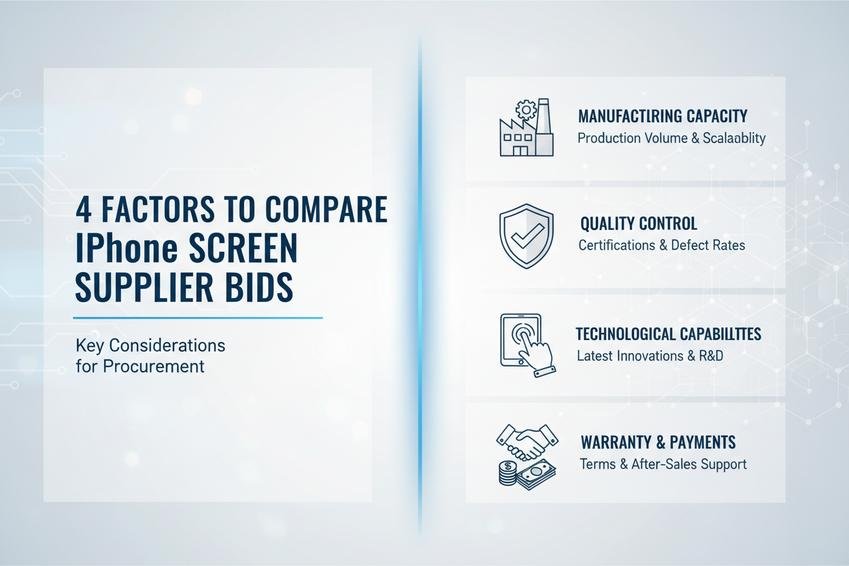
4 Factors To Compare iPhone Screen Supplier Bids
Choosing the right iphone screen supplier is not just about price tags. It’s about keeping your orders steady, your quality tight, and your cash flow healthy. When comparing an iphone screen supplier, break the decision into four practical angles so your iPhone screen supply chain doesn’t fall apart during peak seasons.
Manufacturing Capacity vs. Production Lead Times
When reviewing an iphone screen supplier, start with output reality, not promises.
- Core production strength
- Production volume capacity per month
- Number of active assembly lines
- Current equipment availability rates
- Workforce stability
- Size of skilled labor force
- Shift rotation system
- Overtime flexibility during rush orders
Then connect that to time performance:
- Average order fulfillment speed
- Historical delivery timelines
- Frequency of production bottlenecks
A strong iPhone screen supplier should show how capacity directly protects lead time. If output is high but delivery slips, something’s off. Reliable iphone display suppliers, like screen stocks, usually share real production metrics instead of vague estimates.
Quality Control Standards vs. Durability Ratings
Quality isn’t just a checklist. It’s proof.
- Internal safeguards
- Documented testing procedures
- Batch-level defect rates tracking
- Verified material sourcing records
- Routine component inspection
- Real-world endurance
- Measured impact resistance
- Certified scratch resistance
- Long-cycle environmental testing
- Detailed failure analysis reports
Ask your iphone screen supplier how lab data aligns with field returns. Low defect rates must match durability ratings. A dependable iphone screen supplier will connect process control with real drop-test numbers, not just marketing claims.
Technological Capabilities vs. Touchscreen Sensitivity
Tech specs matter, but user feel matters more.
- Panel foundation
- Type of display technology
- Native resolution and pixel density
- Maximum brightness output
- Measured color accuracy
- Touch performance
- Response time in milliseconds
- Stable multi-touch support
- Minimal ghosting issues
- Refined calibration methods
An experienced iphone screen supplier explains how hardware choices affect swipe smoothness. Advanced display technology without tuned calibration still feels clunky. Top iphone screen suppliers test sensitivity under heat, cold, and heavy use.
Warranty Provisions vs. Payment Schedules
Money talks. Risk management talks louder.
- Protection scope
- Clear defect coverage terms
- Defined return policy window
- Available repair services
- Simple claim process
- Financial rhythm
- Flexible payment terms
- Structured credit options
- Reasonable deposit requirements
- Predictable invoice cycles
Balance is key. An iphone screen supplier offering long warranty coverage but rigid upfront payment may strain cash flow. Solid partners like screen stocks align warranty confidence with practical payment structures, making your iPhone screen supplier relationship stable for the long run.
Inconsistent Quality? Batch Testing Solutions Explained
Quality drama is the last thing any repair shop or distributor wants. If you rely on an iphone screen supplier, you already know one bad batch can mess up returns, reviews, and margins. This guide breaks down how smart batch testing keeps your iphone screen orders steady, your supply chain calm, and your customers off your back.
Designing Your Batch Testing Protocols: Key Metrics to Track
When working with an iphone screen supplier, testing can’t be random. It needs structure.
- Core Display Performance
- Visual Output
- Check Screen Brightness against internal benchmarks.
- Validate Color Accuracy under controlled lighting.
- Inspect for Pixel Defects, even minor edge bleed.
- Stability
- Monitor refresh consistency during extended use.
- Track abnormal flicker reports tied to specific lots.
- Visual Output
- Touch & Interaction Response
- Sensitivity Calibration
- Measure Touch Sensitivity across all corners.
- Compare multi-touch response delays.
- Real-World Simulation
- Test swipe, pinch, and rapid typing stress.
- Sensitivity Calibration
- Physical & Cosmetic Integrity
- Surface Review
- Log visible scratches or Physical Damage on arrival.
- Statistical Control
- Calculate overall Defect Rate per batch before approval.
- Surface Review
This layered approach helps any iphone screen supplier relationship stay predictable, not risky.
Integrating Third-Party Labs for Color Gamut and Brightness Levels
Internal checks are solid. Independent validation builds trust.
- Color Verification
- Measure Color Gamut coverage using a Spectrophotometer.
- Cross-check results with a Colorimeter for consistency.
- Confirm stable Color Temperature under varied brightness.
- Brightness & Uniformity
- Test peak Brightness Levels.
- Record Luminance Uniformity across panel zones.
- Compliance & Certification
- Validate safety standards.
- Confirm environmental compliance.
Professional buyers often prefer suppliers like screen stocks because third-party lab reports remove guesswork and protect long-term contracts.
Real-Time Data Analysis for Supply Chain Disruptions Prevention
Batch testing doesn’t stop at the factory floor.
- Production Monitoring
- Track Production Lead Time shifts weekly.
- Align batch approval speed with shipment windows.
- Quality Intelligence
- Centralize Quality Control Data from each iphone screen supplier.
- Flag rising defect patterns before scale-up.
- Supply Chain Visibility
- Evaluate Supplier Performance monthly.
- Sync Logistics Tracking with warehouse updates.
- Monitor Inventory Levels to avoid panic ordering.
- Run ongoing Risk Assessment reviews.
With partners like screen stocks and a disciplined iphone screen supplier strategy, quality stops being a gamble. It becomes part of the routine.
FAQs about Iphone Screen Supplier
How can I verify an iPhone screen supplier’s manufacturing capacity before signing a contract?
Choosing the wrong iphone screen supplier can stall your entire sales cycle. Verification should feel like due diligence, not blind trust.
1) Factory Strength Check
- Review Manufacturing Capacity reports and real Production Lead Times.
- Confirm Technological Capabilities across LCD and OLED Panel Technology.
- Match daily output with your forecasted volume to test scalability.
2) Quality Reality Test
- Request batch data on Display Resolution and Brightness Levels.
- Inspect Quality Control Standards and defect rate history.
- Validate Durability Ratings under stress simulations.
3) Human Signals
- Observe Communication Channels during negotiation.
- Ask about past Supply Chain Disruptions and how management responded.Calm, transparent answers often reveal more than documents.
Why do quality control standards matter when comparing different iPhone screen supplier bids?
A lower quote can hide costly failures. Quality Control Standards protect your margin and reputation.
Key checkpoints include:
- Screen Specifications: Stable Color Gamut, accurate Display Resolution, consistent Refresh Rate, and precise Touchscreen Sensitivity.
- Certifications: Verified Safety Certifications and Environmental Standards compliance.
- Batch Consistency: Trend reports showing defect ratios across shipments.
When Performance Reviews are part of ongoing Service Level Agreements, problems surface early. Without this discipline, Reputational Risks rise fast—and recovery is expensive.
What contractual and logistics factors determine a supplier’s long-term reliability?
Price starts the conversation. Contracts and logistics decide the outcome.
A stable iphone screen supplier usually shows strength in three layers:
① Contractual Discipline
- Clear Warranty Provisions
- Balanced Payment Schedules
- Defined Intellectual Property Rights and Confidentiality Clauses
② Logistics Backbone
- Reliable Shipping Methods and strong Global Reach
- Protective Packaging Standards
- Organized Inventory Management and smooth Customs Clearance
③ Risk Awareness
- Plans for Geopolitical Stability shifts
- Backup sourcing to reduce Supply Chain Disruptions
- Transparent Financial Stability reporting
When Strategic Alignment exists between both sides, disputes shrink and long-term growth becomes realistic rather than hopeful.






Recent Comments