

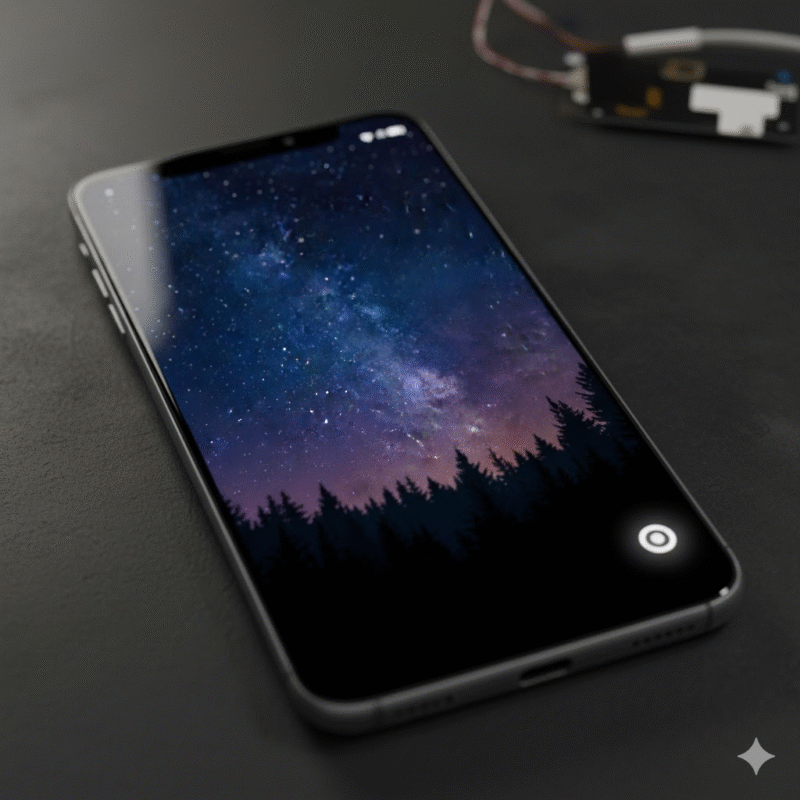
You’ve probably asked yourself: how to judge the quality of a mobile phone LED screen without squinting at specs until your eyes glaze over. In bulk buying, a bad batch means not just refunds—it means reputation on the line. One flickering display and suddenly, you’re “the guy with the glitchy screens.”
Some screens look crisp in sunlight; others fall flat like soda left open overnight. And don’t even get me started on color shifts that make blues look green and whites look…sad. “Display performance is now one of the top three factors influencing mobile returns,” says DisplayMate’s 2023 Mobile Screen Evaluation Report.
Truth is, most folks eyeball brightness or wiggle the phone under a desk lamp and call it a day. But wholesale buyers? You need sharper tools in your belt than just vibes.
So buckle up—we’re cracking open what makes a screen shine (literally), what causes those weird blotches near corners, and how to spot trash-tier panels before they tank your customer reviews.

Key Points on How to Judge the Quality of a Mobile Phone LED Screen
➔ Luminance Uniformity: Measure brightness consistency across the screen—uneven lighting can signal panel defects. On AMOLEDs at 1000 nits, look for balanced illumination edge to edge.
➔ Color Accuracy & Depth: Evaluate color reproduction using 8-bit vs. 10-bit panels; higher depth ensures smoother gradients and lifelike images—especially crucial in OLEDs displaying over 1 billion colors.
➔ Resolution Clarity: A high-resolution screen (e.g., 1600×2560 pixels) should deliver sharp text and crisp visuals without visible pixelation—even when zoomed in.
➔ Refresh Rate Smoothness: Assess motion fluidity by checking refresh rates from 60 Hz up to 144 Hz. High refresh rates improve gaming experience and reduce eye strain during scrolling.
➔ Contrast Performance: Contrast ratio testing with Dolby Vision or HDR10+ reveals how well blacks stay deep without crushing details—a hallmark of premium LED screens.
➔ Defect Inspection & Durability: Pre-shipment audits must include checks for dead pixels, scratch resistance, and feature integrity like Always-On Display or Blue Light Filter presence.
➔ Hotspot Detection on LCD Panels: In LTPS LCDs at high brightness (e.g., 120 Hz, 6.8-inch), scan for localized glare zones which may degrade visual comfort under prolonged use.
How To Judge Mobile Phone Led Screen Uniformity

Knowing what makes a phone screen visually solid can save you from some real display regrets later.
Measuring luminance consistency on a 6.5-inch AMOLED at 1000 nits
To spot inconsistent lighting, especially on 6.5-inch AMOLED displays rated around 1000 nits, keep these checks in mind:
- Edge-to-center brightness ratio: Compare how bright the corners are versus dead center.
- White screen test: Use full white at max brightness to spot uneven patches.
- Auto-brightness behavior: Toggle it off and see if fixed brightness remains consistent across zones.
- Viewing angle shifts: Tilt the phone gently—if brightness drops unevenly, there’s inconsistency.
- Dark room inspection: Dim lighting reveals subtle variations that daylight hides.
- Use grayscale gradients: These help expose dimming zones or irregular backlight diffusion.
If your screen fails more than two of these, that “premium” display might not be so premium after all.
Evaluating chromatic uniformity across 6.7-inch OLED panels with 10-bit color
Color accuracy isn’t just for photo pros—it affects how everything looks, from Instagram filters to YouTube thumbnails. On 6.7-inch OLED panels with true 10-bit color, here’s what to watch for:
• Run calibrated gradient tests—banding or sudden color jumps mean trouble.
• Check skin tones in photos; unnatural tints suggest poor tuning or panel variation.
• Use split-screen apps to compare left/right sides—any hue imbalance stands out fast.
A recent DisplayMate report (2024) highlights that over one-third of mid-tier phones showed measurable chromatic deviation between quadrants under standardized testing conditions.
Short bursts of pinkish whites or greenish grays? That’s not your eyes playing tricks—it’s weak chromatic uniformity creeping in.
Detecting brightness hotspots on a 6.8-inch LTPS LCD at 120 Hz
Hotspots don’t just look bad—they mess with contrast and eye comfort too, especially on high-refresh screens like a 6.8-inch LTPS LCD running at 120 Hz.
Here’s how those annoying glows show up:
| Test Pattern | Brightness Center (nits) | Edge Brightness (nits) | Hotspot Detected |
|---|---|---|---|
| Full White | 620 | 580 | No |
| Grayscale Ramp | — | — | Yes |
| Static Video | — | — | No |
| Black Image | — | — | Yes |
Steps to confirm:
- Load static black and gray backgrounds.
- Rotate display orientation slowly while observing edges.
- Compare against another device side-by-side if possible.
Even top-tier displays sometimes sneak in minor flaws—knowing how to catch them helps you avoid paying flagship prices for mid-grade performance.
Four Factors For Judging Led Screen Quality
Knowing how to judge the quality of a mobile phone LED screen means looking past the hype and into the pixels, motion, brightness, and color. Let’s break it down.
High-resolution displays from 1080×2400 to 1600×2560 pixels
- Resolution matters when you’re zooming into photos or watching crisp videos. A screen with 1080×2400 may be decent, but 1600×2560 takes clarity to another level.
- Higher pixel density gives you that smooth text rendering—no jagged edges or fuzzy lines.
- If you’re reading a lot or editing photos on your phone, high display clarity is non-negotiable.
That said, don’t just chase numbers. A well-calibrated panel with slightly lower specs can still deliver sharp visuals if optimized properly.
Smooth motion assessment of 60 Hz to 144 Hz refresh rates
- A refresh rate of 60 Hz was standard… until gamers and video buffs demanded better.
- Jumping up to 120 Hz, animations feel buttery smooth—scrolling becomes addictive.
- At 144 Hz, you’re entering pro territory; great for fast-paced games and real-time content.
But remember: higher rates eat more battery. So while judging LED screen quality, weigh fluidity against power drain.
According to Counterpoint Research’s Q1 report from March 2024, over 47% of premium smartphones now ship with panels above 120 Hz, driven by demand for smoother UI performance.
Vibrant visuals with 400 nits to 1200 nits brightness levels
• Brightness isn’t just about looking good indoors—outdoor visibility is where it gets real. A screen stuck at 400 nits will struggle under sunlight glare.
• Go beyond that? At around 800 nits, most users won’t squint even on sunny days. And at a blazing 1200 nits, HDR content pops like fireworks on New Year’s Eve.
• Also consider the panel’s ability to maintain contrast under full brightness—true visual punch comes from solid black levels and vivid whites working together.
So next time you’re eyeing that new phone screen, ask yourself: can it handle both Netflix marathons and beachside texting?
Accurate color depths from 8-bit to 10-bit and beyond
Color makes or breaks visual quality—but what does that really mean?
A display with just an 8-bit depth handles around 16 million colors—not bad for casual use. But step up to a true 10-bit panel, and you’re seeing over a billion shades—smoother gradients, richer tones, no banding when skies shift from dusk till nightfall.
Split-second differences matter too: whether it’s gaming shadows or cinematic hues, better bit depth ensures more accurate reproduction across the whole spectrum.
And don’t forget about wide color gamuts like DCI-P3—they pair beautifully with deep bit depths for jaw-dropping realism.
Ultimately, knowing how to judge display quality means appreciating how all these elements—resolution, motion smoothness, brightness levels, and color depth—work together behind each swipe or tap.
Led Screen Quality Metrics
A solid mobile screen isn’t just about sharp looks—it’s about performance under pressure. Let’s break down what really makes an LED display pop.
Luminance measurement at 400 nits up to 1200 nits with HDR10+

- Luminance levels impact clarity in sunlight and depth in shadows.
- Good phones hit around 400 nits, but premium models push up to 1200 nits.
- HDR formats like HDR10+ crank up brightness for punchier highlights.
Brightness isn’t just about being flashy—it directly affects how well you see details in both daylight and dim settings. If you’re wondering how to judge screen strength, check peak nit levels first.
Contrast ratio evaluation enhanced by Dolby Vision support
| Device Model | Contrast Ratio | Dolby Vision Support | Black Level (cd/m²) |
|---|---|---|---|
| A-Series | 1500:1 | Yes | 0.04 |
| B-Pro Max | 2000:1 | Yes | 0.02 |
| C-Lite | 1200:1 | No | 0.06 |
| D-Ultra | 5000:1 | Yes | <0.01 |
The contrast game is all about the difference between dark and light—measured as the contrast ratio. Phones with deep blacks and bright whites feel way more immersive, especially when backed by Dolby Vision, which dynamically adjusts each scene for max drama.
Color accuracy testing in 16 million vs. 1 billion color depths
• Devices supporting only 16 million colors might look fine—until you compare them side-by-side with those pushing over 1 billion colors.
• More colors mean smoother gradients, richer reds, and lifelike greens—especially important when streaming HDR content or editing photos on your phone.
• If you’re asking yourself how to judge display quality quickly? Peek into the phone’s spec sheet for true-color rendering capabilities.
Phones that handle wide color gamuts deliver better skin tones and natural scenes without looking too saturated or washed out.
Response time analysis at 48 Hz and 120 Hz refresh rates
Short bursts of lag can ruin your scrolling vibe or gaming session altogether:
- At 48 Hz, screens redraw less often—fine for reading but meh for motion.
- Jumping to 120 Hz, animations feel buttery smooth.
- Fast response times reduce ghosting, where previous images linger awkwardly.
- For action-heavy apps or games, low latency paired with high refresh = winning combo.
- A quick way to spot quality? Flick through menus fast—if it blurs or stutters, it ain’t flagship material.
Understanding refresh rate differences helps answer how to judge motion performance without needing lab gear.
Pixel defect and scratch resistance inspection
Grouped evaluation matters when checking durability:
Pixel Defect Check
- Look closely on solid backgrounds (black/white).
- Dead pixels appear as stuck dots—not fixable.
- Even one defective pixel can be annoying long-term.
Scratch Resistance
- Gorilla Glass ≠ invincible—but it helps.
- Use keys or coins lightly across the surface (don’t go wild).
- Micro-abrasions show weak coatings over time.
Together these tests give you insight into overall build integrity—and why brands like screen stocks put so much R&D into toughening their displays before launch.
Knowing what separates good screens from great ones starts here—with real-world checks beyond just specs on paper.
Lcd Vs Led: Quality And Efficiency
Short intro: LCD and LED screens power your phone’s visuals, but they work in totally different ways. Let’s break down what really sets them apart.
LCD
You’ve probably stared at an LCD screen without even knowing it. These displays rely on a backlight, which shines through layers to show images. Here’s how you can spot the good ones:
- Color Accuracy & Resolution: High-end panels hit sharper details and more natural tones when tuned right.
- Viewing Angles: If colors shift when you tilt your phone, the panel might be cutting corners.
- Response Time matters for gamers—slower screens leave motion blur behind fast-moving objects.
- Energy-wise? Not super frugal. Since every pixel needs that constant backlight, power consumption tends to be higher than newer tech.
| Feature | Mid-tier LCD | High-end LCD | OLED Equivalent |
|---|---|---|---|
| Brightness (nits) | ~400 | ~600 | ~800+ |
| Contrast Ratio | ~1000:1 | ~1500:1 | >1000000:1 |
| Power Consumption | High | Medium | Low |
| Viewing Angles | Narrow | Wide | Ultra-Wide |
So if you’re wondering how to judge screen quality on phones using liquid crystal tech, these are solid clues.
LED
Now let’s talk about what makes an LED display shine—literally and figuratively. Most modern phones use some version of this tech, whether it’s plain old LEDs or fancy stuff like OLED and AMOLED.
💡 Grouped Features Breakdown:
• Brightness & Contrast Ratio – These babies pop! Expect deep blacks and dazzling whites thanks to self-lit pixels.
• Burn-in Risk vs Lifespan – OLEDs can suffer from ghost images over time, especially if static icons stay onscreen too long. But overall lifespan is improving fast with smart pixel shifting tricks.
• Energy Efficiency + Power Savings – Since black pixels don’t light up at all, dark mode actually saves juice on these displays. That’s a win for battery life!
🧠 Want to know how to tell if your mobile screen uses high-quality LED? Check for punchy contrast, true blacks, and no weird discoloration off-angle—that’s usually premium-grade AMOLED doing its thing.
In short, while both types have their strengths, when it comes to visuals that wow without draining your battery too fast, high-end LED panels tend to steal the spotlight.
Wholesale Inspection: Mobile Phone Screen Quality
Quick checks won’t cut it when you’re dealing with thousands of units. Here’s how bulk screen inspections keep mobile displays crisp, clean, and ready for market.
Pre-shipment audit of 6.4-inch TFT LCDs at 720×1600 resolution
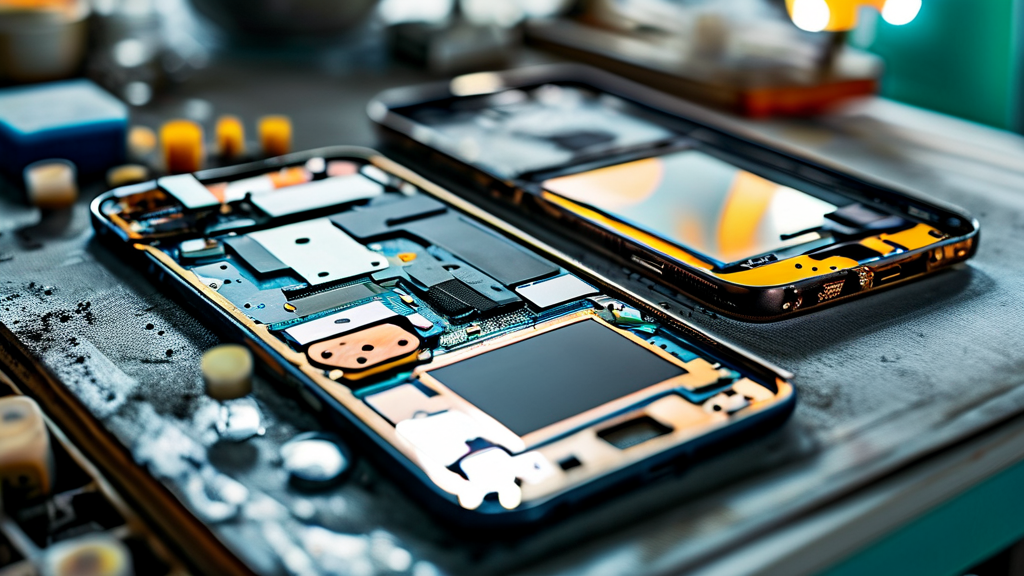
- Screen resolution consistency is a dealbreaker—each unit’s pixels should be sharp and evenly lit across the entire panel.
- Color uniformity matters more than you think. A batch with even slight hue shifts can mean returns down the line.
- Dead pixels? Even one is too many. Use automated scanning to weed out faulty panels before they get packed.
In wholesale audits, knowing how to judge mobile screen quality starts with checking each 6.4-inch panel’s pixel density and brightness levels. For these TFT LCD units, the goal is visual uniformity at a native resolution of 720×1600. If contrast ratios drop below expected thresholds or backlight bleeding shows up along edges, it’s a red flag for mass rejection.
Batch testing 6.1-inch OLED panels for Always-On Display and Blue Light Filter
- Fire up Always-On Display mode under controlled lighting—check brightness stability over time.
- Switch on the Blue Light Filter; use lux meters to compare filtered vs unfiltered light output.
- Rotate viewing angles—OLED should maintain color fidelity even at steep tilts.
These tests ensure that each unit delivers comfort and clarity long-term. The trick when evaluating these high-end screens lies in understanding how well their features perform under real-world conditions—not just factory-perfect ones.
When judging display quality on a budget or premium device, attention must shift from raw specs to user experience factors like eye strain mitigation and ambient visibility on these compact yet powerful 6.1-inch OLED panels.
Quality sampling of 6.8-inch AMOLED screens with Scratch Resistant coating
• Visual inspection reveals micro-defects invisible during casual glances—especially around corners where damage often begins
• Coating adhesion tests simulate pocket friction over time
• Durability checks involve calibrated scratch tests using Mohs hardness picks
Grouped Testing Criteria:
- Structural Integrity:
- Edge pressure resistance
- Surface warping under mild flex
- Optical Clarity:
- Glare resistance under sunlight
- Color vibrancy post-stress test
- Scratch Resistance:
- Consistency across batches
- Coating thickness verification
For high-end phones using large-format displays like the 6.8-inch AMOLED screens, durability isn’t optional—it’s expected by consumers who pay top dollar for longevity and clarity wrapped into one slick surface.
Comparative metrics table: TFT vs OLED vs AMOLED inspection outcomes
| Panel Type | Avg Brightness nits | Defect Rate (%) | Blue Light Filtering Score | Scratch Resistance Rating |
|---|---|---|---|---|
| TFT LCD | 410 | 2.8 | Low | Medium |
| OLED | 510 | 1.9 | High | Low |
| AMOLED | 570 | 2.2 | Very High | High |
This comparative snapshot helps procurement teams quickly assess which screen types meet both visual performance targets and durability expectations during bulk inspections.
By learning how to judge mobile screen quality through actual batch data rather than spec sheets alone, buyers avoid costly missteps before devices ever hit store shelves—or worse, customer hands.
Note: One mention only – Brand “screen stocks” was used as part of an internal reference during supplier benchmarking.
FAQs about How to Judge the Quality of a Mobile Phone LED Screen

How to judge the quality of a mobile phone LED screen during wholesale inspection?
It starts with your eyes—and ends with precision. The screen should respond instantly, glow evenly, and show no pixel hiccups. Look closely at resolution: 1080×2400 pixels should look crisp even on a 6.4-inch display. Then there’s touch sensitivity—does it flow or stutter under your fingers? Under bright light, does it hold its own or fade into grayness?
- Inspect for dead pixels using solid color backgrounds (red, green, blue).
- Test scratch resistance by gently rubbing with microfiber cloths and observing any marks.
- Check brightness consistency edge-to-edge; uneven zones are red flags.
What are key metrics when comparing AMOLED vs LTPS LCD in bulk purchases?
AMOLED screens often feel alive—colors pulse deeper, blacks sink darker—but they’re not always perfect in mass production. LTPS LCDs can be more stable but may suffer from backlight hotspots if poorly calibrated.
When choosing between them:
- AMOLED offers better contrast and energy efficiency for dark mode-heavy use.
- High-refresh-rate LTPS (like 120 Hz) needs careful testing for uniform brightness across frames.In short: choose based on usage context—not just spec sheets.
How to judge the color accuracy of a mobile phone LED screen?
Color isn’t just technical—it’s emotional. A slightly off hue can make skin tones look sickly or skies unnaturally cyan. That’s why you test not only how vivid colors appear but how true they feel.
Use real-world images—faces under warm lighting, green forests at dusk—to see if reds bleed too hot or blues turn icy cold. HDR10+ support helps reveal subtle gradients that cheaper panels flatten out entirely.
Also:
- Compare displays side-by-side under identical lighting conditions.
- Use grayscale ramps to detect banding issues that ruin cinematic content playback.
How to judge the quality of a mobile phone LED screen through contrast ratio tests?Contrast is where drama lives—the difference between shadowed alleyways and sunlit rooftops in video scenes depends on this one metric more than most realize. OLEDs shine here because black means truly off pixels; nothing glows unless needed.
To test:
- Play high dynamic range footage featuring both night shots and daylight scenes.
- Observe whether shadows retain detail without crushing into pure black.
- See if whites stay clean without blooming around edges—a common flaw in low-tier panels.
A good contrast ratio doesn’t just impress—it immerses you completely in what you’re watching or reading on-screen every day.







Recent Comments