


Ship lithium batteries from China without costly setbacks. PI967 vs PI966 rules decide labels, limits, and whether cargo flies or sits.
PI967 vs PI966 rules can make or break your battery shipment from China; airlines will send it back without blinking. Choose the wrong instruction and your cargo stalls on the tarmac while fees stack up.
That small code controls labels, paperwork, and 30% charge limits. Get it right, freight flies.
Quick Answers on PI967 vs PI966 rules
-
Scope Difference: PI966 covers batteries packed with equipment; PI967 applies when batteries are contained in equipment, affecting labels, docs, and handling.
-
Charge Limits: PI966 caps lithium-ion cells/batteries at ≤30% state of charge for air transport; PI967 may allow operational charge when installed.
-
Quantity & Packaging: PI966 imposes strict Section II limits on cells/batteries per package; PI967 offers more flexibility if batteries remain inside the device.
3 Key Differences Between PI967 Vs PI966 Rules
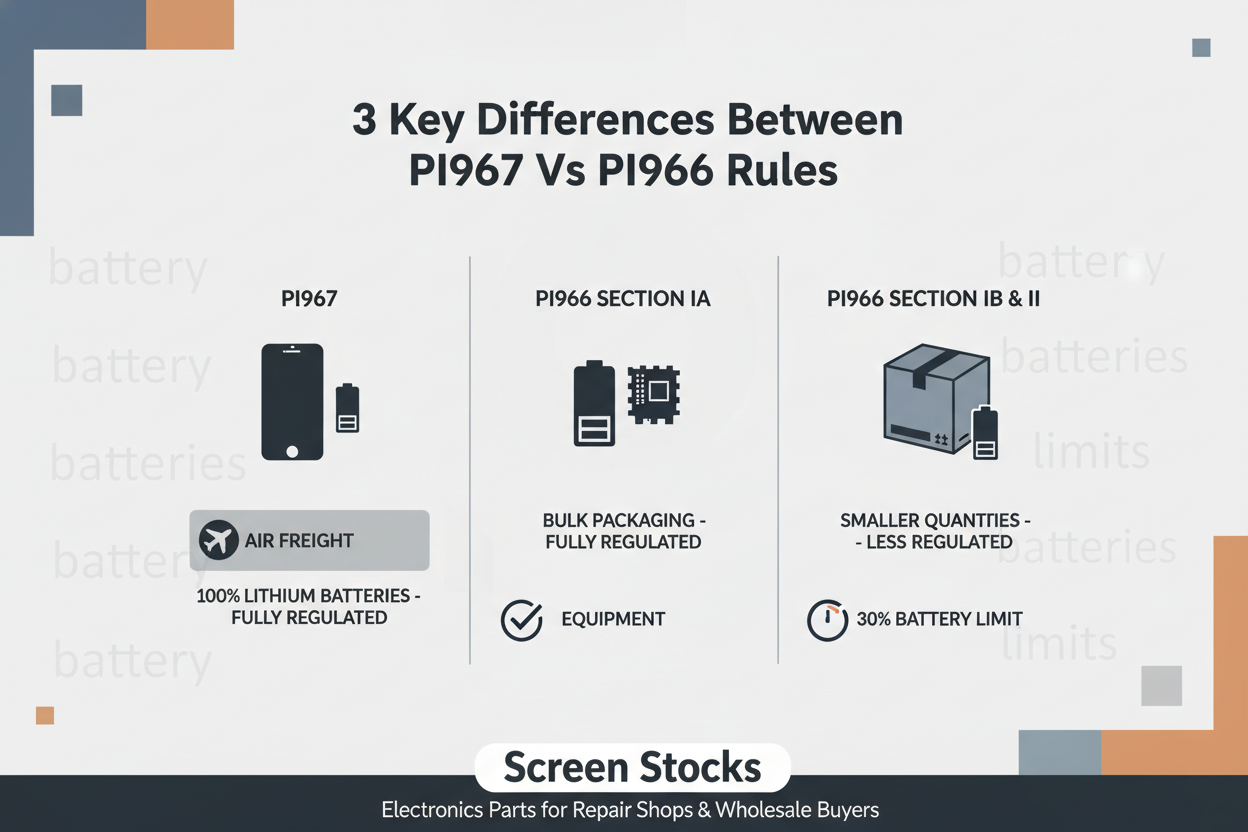
PI967 vs PI966 rules sound like alphabet soup, but the mix-ups cost time, money, and sometimes a refused shipment. This quick rundown keeps PI967 and PI966 straight, so your lithium batteries move cleanly with FastShip China.
Scope of Application Explained
When people say “PI967 vs PI966 rules,” the real split is the application scope—where the lithium batteries physically are at handoff.
-
PI966: lithium batteries packed with equipment
-
What that means in plain terms
- The battery is in the same box as the device, but not installed. It can feel almost standalone during handling.
-
What usually changes for shippers
-
Handling teams treat the battery like its own risk item, even if the gadget is sitting right next to it.
-
Paperwork and marks often tighten up because “packed with” looks closer to shipping a standalone battery than most folks expect.
-
-
-
PI967: batteries contained in equipment
-
What that means
- The battery is installed in the device, so it’s not acting standalone during normal transport.
-
What usually changes
- The device’s design and how the battery is contained in it becomes part of the safety story (secure fit, protected terminals, no easy movement).
-
If you’re bouncing between “PI967 vs PI966 rules” on different SKUs, FastShip China can sanity-check the packing style so the PI967/PI966 choice matches the real-world build.
State-of-Charge Limits Compared
For PI967 vs PI966 rules, State-of-Charge is where people get tripped up, fast.
-
Under PI966, air shipments commonly face SoC limits: 30% charge (or less) for lithium-ion cells/batteries. That’s about risk control, not convenience.
-
Under PI967, when the battery is contained in equipment, practical reality kicks in: some devices ship closer to operational needs, and teams talk about anything from low battery capacity levels up to 100% charge for certain use-cases—yet you still have to match the exact airline and regulation lane, because shipping regulations don’t forgive guesswork.
-
The street-smart move: treat PI967 as “installed battery logic” and PI966 as “battery-shipment logic,” then confirm the allowable State-of-Charge per route.
FastShip China helps shippers keep PI967 vs PI966 rules aligned with real SoC limits, not what someone heard in a warehouse chat.
Packaging Quantity Restrictions
Quantity isn’t just “how many can I toss in.” Under PI967 vs PI966 rules, packaging restrictions and quantity limits change based on installation status and protection.
-
PI966 (Section II scenarios are where limits bite hardest)
-
Common control points
-
cells per package caps can apply, plus stricter expectations around inner protection.
-
Weight and content discipline matters: net weight of batteries, plus gross weight handling expectations, can get scrutiny when packs look like “extra batteries.”
-
-
Why it feels strict
- Batteries sitting packed with equipment can shift, rub, or short if packaging is sloppy, so the rules squeeze harder.
-
-
PI967
-
Common control points
-
More flexibility when batteries are securely installed; the package is really shipping the device, not a loose energy brick.
-
The key is proving it’s truly contained in equipment, not “battery plus device in the same carton.”
-
-
| Scenario (air) | Instruction | Battery placement | Typical SoC target | Practical quantity vibe |
|---|---|---|---|---|
| Phone + spare battery in same box | PI966 | packed with equipment | 30% charge | Tighter quantity limits |
| Laptop shipped with battery installed | PI967 | contained in equipment | Depends on ops need | More flexible if secured |
| Tool + battery installed | PI967 | contained in equipment | Route-dependent | Often easier on counts |
| Camera + two loose packs beside it | PI966 | packed with equipment | SoC limits apply | Counts watched closely |
| Device only, no battery | N/A | No lithium batteries | N/A | No battery caps |
If your cartons are flirting with the edge on gross weight, cells per package, or mixed content, FastShip China can help map the packing plan back to PI967 vs PI966 rules so inspections don’t turn into delays.
Can Your Batteries Ship Under PI966?
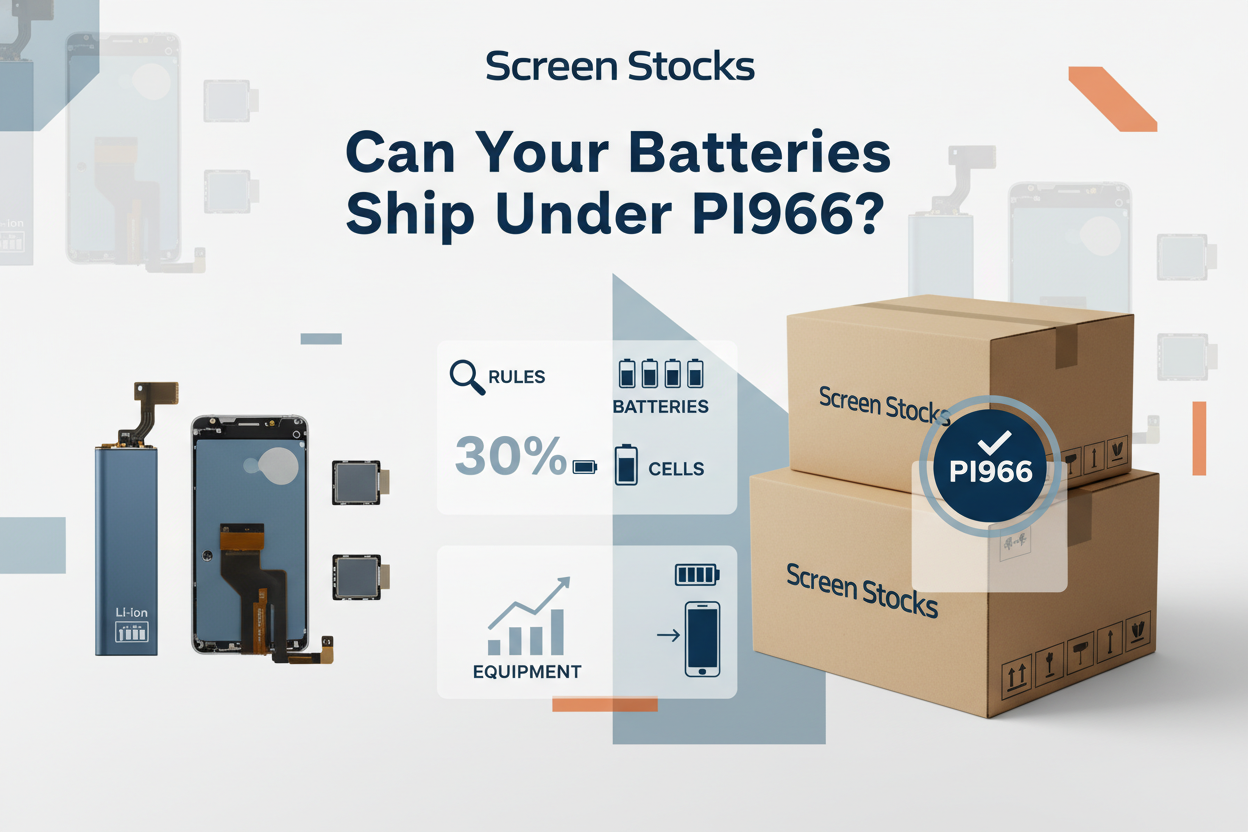
PI967 vs PI966 rules can feel like a maze, but it’s really about what’s inside the box and how it’s packed. This quick guide keeps PI967 vs PI966 rules practical, with plain talk on battery types, paperwork, state-of-charge checks, and the slip-ups that trigger delays. FastShip China can sanity-check your file before it flies.
Eligible Battery Types for PI966
PI967 vs PI966 rules start with the UN number: PI966 is for UN3481 lithium-ion batteries packed with equipment, not batteries shipped alone. That’s where “PI967 vs PI966 rules” trips people up, because PI967 is batteries contained in equipment, while PI966 is packed alongside it.
-
Battery chemistry fit
-
Allowed: secondary cells, rechargeable small batteries (including some button cells) that are lithium-ion and tied to UN3481
-
Not PI966: UN3480 standalone lithium-ion, and any lithium-metal / primary cells / non-rechargeable profiles that map to different instructions
-
-
Proof and ratings
-
test reports (UN38.3) must exist and be traceable
-
technical specifications should show watt-hour limits that match the lane you’re shipping under
-
-
Packing logic (the “PI967 vs PI966 rules” gut-check)
-
If the battery rides inside the device, you’re drifting toward PI967 rules
-
If it rides next to the device in the same outer pack, PI966 rules are usually the play
-
Required Documentation Checklist
For PI967 vs PI966 rules, docs aren’t “nice to have”; missing one can stall the whole move. FastShip China typically asks for a simple packet that lines up with the airline’s screeners and the packaging instructions.
-
Basic set (most shipments)
-
air waybill with the right battery wording
-
UN number shown consistently across documents and marks
-
UN38.3 test reports / test summary available on request
-
Safety Data Sheet if your customer or carrier requires it for internal handling
-
-
When you cross limits (where PI967 vs PI966 rules get strict)
-
Prepare a Shipper’s Declaration (only when applicable by thresholds)
-
Add emergency response contact details that actually answer the phone
-
Confirm labeling matches the declared line items, plus the battery handling mark
-
State-of-Charge Verification Procedure
PI967 vs PI966 rules don’t end at packing; airlines care about the SoC limit too. For PI966 by air, many shippers operate with a 30% state-of-charge control, and you’ll want a repeatable verification method that doesn’t feel sketchy during an audit.
-
What to measure (and how you prove it)
-
voltage measurement alone can mislead, so tie readings back to capacity curves when possible
-
Record charging status and estimated discharge level at time of pack-out
-
-
Control loop (simple, defensible)
-
Equipment
-
Use calibrated testing equipment
-
Lock calibration records to the same SKU family
-
-
Sampling
- Check representative units per lot, then spot-check cartons after packing
-
Evidence
-
Keep internal logs so PI967 vs PI966 rules compliance is more than “trust me”
-
Store results with shipment references so you can pull them fast if asked
-
-
Common Pitfalls to Avoid
PI967 vs PI966 rules get blown up by small stuff that looks harmless at the warehouse table. Avoid the usual non-compliance traps and you’ll dodge nasty regulatory fines and last-minute offloads.
-
Fast red flags
-
Mixing PI966 cartons with standalone UN3480 cells (classic “incorrect packaging”)
-
mislabeling the pack, or skipping marks entirely because it’s “just a few small batteries”
-
Letting terminals touch, inviting short circuit and potential thermal runaway
-
-
Quick self-checks that save your day
-
Match docs to the exact contents; no “close enough” improper documentation
-
If thresholds are exceeded, don’t ship as “not restricted”; undeclared batteries get caught
-
Reconfirm the lane: PI967 vs PI966 rules differ mainly on “packed with” vs “contained in,” so don’t guess—verify
-
Customs Rejections? Understand PI967 Vs PI966
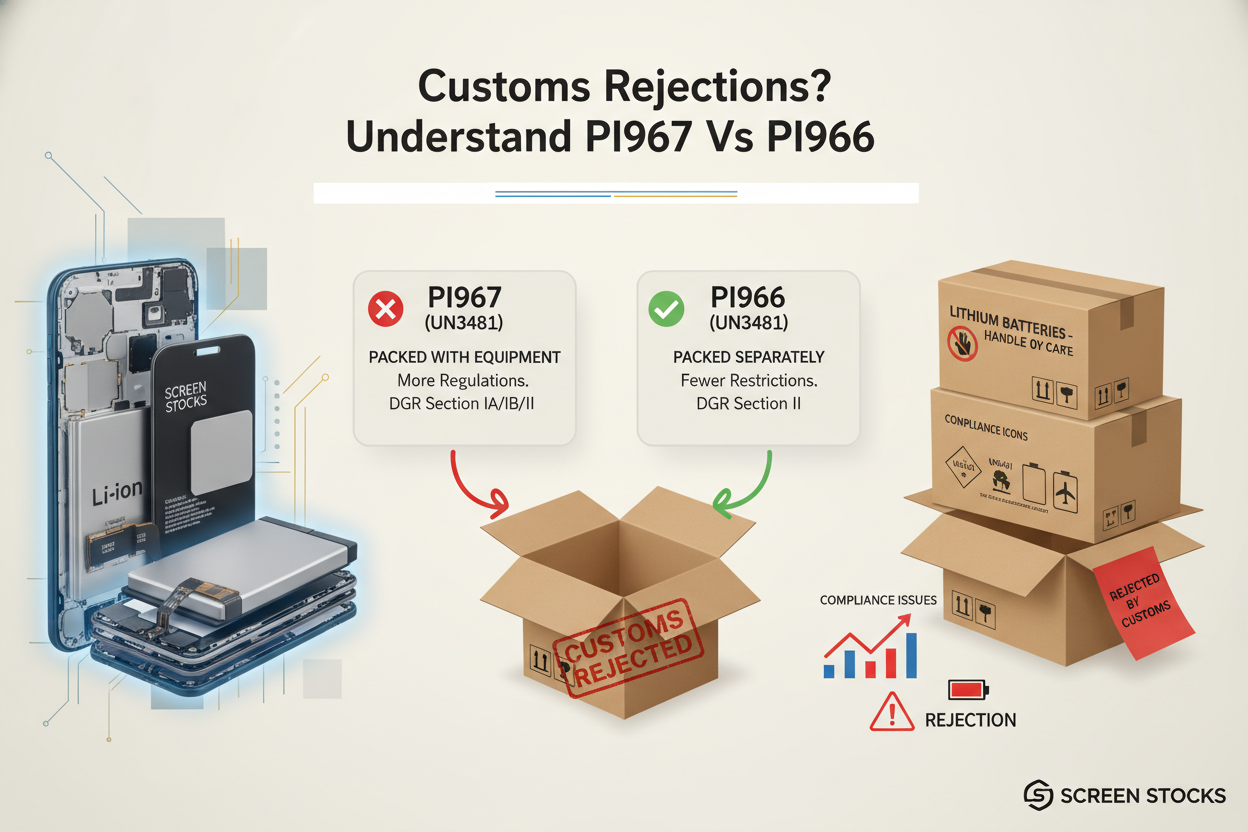
Shipping lithium batteries is where tiny slip-ups turn into big customs rejection headaches. This guide breaks down PI967 vs PI966 rules in plain talk, so you can spot the usual tripwires: documentation errors, incorrect labeling, and packaging failures. Keep PI967 vs PI966 rules straight, and clearance gets a lot less dramatic.
Top Reasons for Rejection
Most rejections aren’t “mysteries.” They’re predictable non-compliance patterns tied to PI967 vs PI966 rules, and customs or airlines pounce fast.
-
Regulatory violations around IDs and marks
-
UN info problems: wrong UN number, UN number missing on paperwork, or mismatch between invoice and declaration. That’s an instant customs rejection trigger under PI967 vs PI966 rules.
-
Marking gaps: lithium battery mark missing, damaged, too small, or stuck on the wrong face of the box—classic incorrect labeling.
-
Test evidence missing: UN38.3 summary absent when asked, creating safety concerns and delays.
-
-
Packaging failures that raise safety concerns
-
Internal protection: terminals not insulated, no inner packaging, or loose items that can shift.
-
Outer packaging: weak cartons, poor closures, or mixing incompatible items.
-
-
Quantity / SoC issues tied to PI 966 and PI 967 differences
-
Exceeding allowed counts per package, or using the wrong section/category.
-
State-of-charge nonconformance (common on standalone cells), which becomes a clean regulatory violations call.
-
How PI967 Mitigates Risks
PI967 benefits come down to one simple idea: the battery is already in the device, so the shipment “behaves” better in transit. That doesn’t mean it’s a free pass—PI967 vs PI966 rules still apply—but it can lower handling risk and reduce rejection odds.
-
Risk mitigation you can feel on the warehouse floor
-
Less exposed terminals, less chance of shorting, fewer “oops” moments during manual handling.
-
Equipment housing adds a layer of physical protection, which supports enhanced safety.
-
-
Paperwork and pack-out tend to be cleaner
-
It’s easier to describe contents accurately (device + battery) and keep accurate documentation consistent with the UN number—cutting down documentation errors.
-
Packaging often aligns more naturally with compliant packaging expectations, as long as the device is secured against activation.
-
Quick gut-check aligned with PI967 vs PI966 rules: if customs can’t quickly match what’s on the invoice to what’s inside the box, you’re one step away from smooth clearance turning into storage fees.
When PI966 Falls Short
PI966 limitations show up when shippers treat “batteries packed with equipment” like “batteries contained in equipment.” Under PI967 vs PI966 rules, that mix-up is a loud alarm for inspectors.
-
Compliance gaps that cause increased rejection
-
Category confusion: using the wrong packing instruction on the Shipper’s Declaration or AWB notes.
-
SoC misses: standalone cells/batteries face tighter state-of-charge expectations; missing proof can lead to shipment delays.
-
Quantity creep: adding “just one more spare” can push you over limits, and then regulatory non-conformity is obvious.
-
-
Operational friction with carriers
-
Airlines may refuse if anything looks off—label placement, box strength, or incomplete statements—because the perceived inadequate safety risk is higher.
-
If your process is based on outdated requirements, you’ll get bounced even if the goods are fine.
-
Here’s the ugly part: with PI 966, the line between “allowed” and “nope” is thin, and PI967 vs PI966 rules don’t forgive sloppy prep.
Tips to Ensure Smooth Clearance
Treat PI967 vs PI966 rules like a checklist, not trivia. You want fewer surprises, fewer calls from the forwarder, and more customs efficiency.
-
Pre-shipment verification (do this before booking)
-
Confirm the correct PI: PI 967 (contained in equipment) vs PI 966 (packed with equipment). This is the core of accurate declarations.
-
Match commercial invoice wording to UN info and battery type; misalignment invites documentation errors.
-
Keep UN38.3 summaries ready to share.
-
-
Marks, labels, and pack-out (the stuff inspectors actually see)
-
Verify lithium battery mark readability and durability—no smudges, no tiny prints—so proper labeling holds up.
-
Use secure packaging: prevent movement, protect terminals, and block accidental activation.
-
-
Coordination that saves you from rework
-
Send photos of the finished carton and labels to your forwarder for a quick review—simple clearance strategies.
-
Ask the carrier about any lane-specific quirks so your compliance checklist matches reality.
-
Numeric spot-check table for common rejection triggers (use it as a quick internal scorecard):
| Check item (linked to PI967 vs PI966 rules) | Target pass rate (%) | Typical failure impact (days) |
|---|---|---|
| Labels/marks correct (proper labeling) | 100 | 1–3 |
| UN info matches invoice (accurate declarations) | 100 | 2–5 |
| UN38.3 summary retrievable (pre-shipment verification) | 95 | 1–4 |
FAQs about Pi967 Vs Pi966 Rules
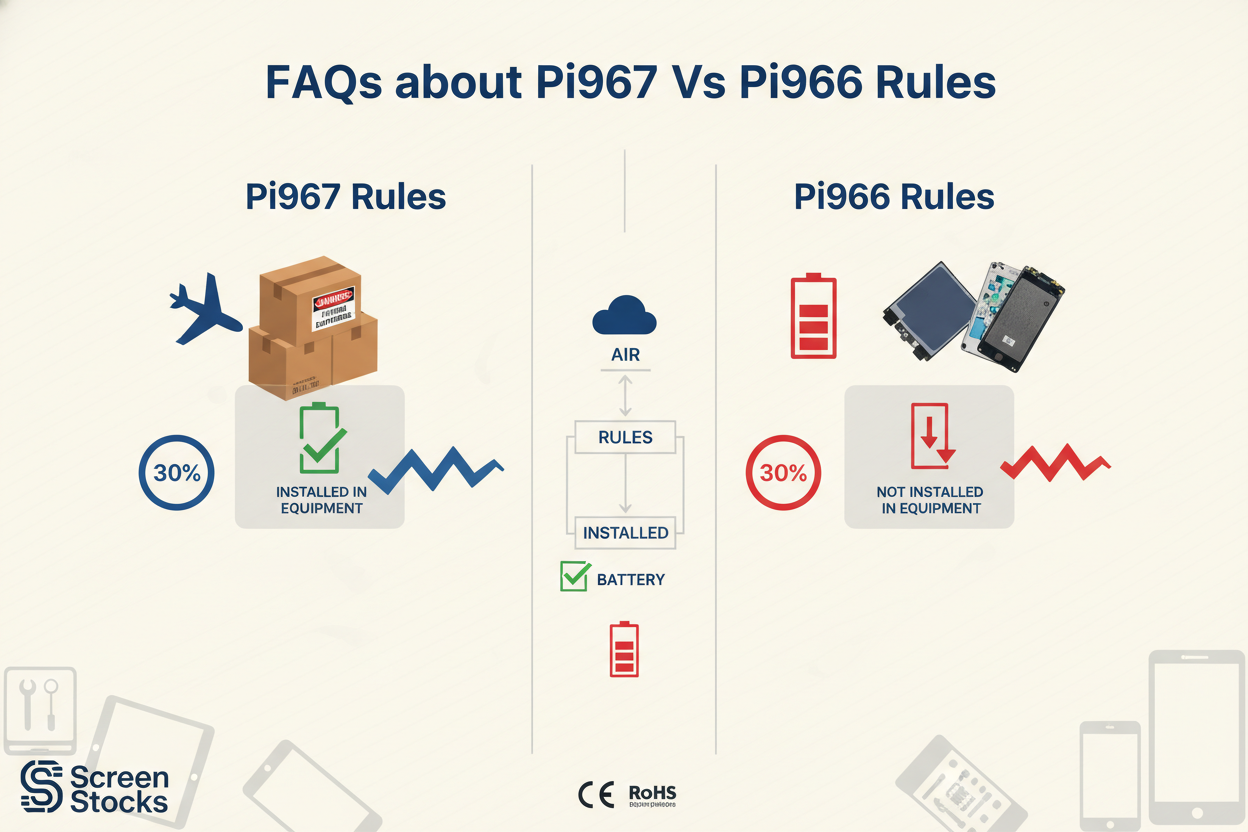
What are the key differences in PI967 vs PI966 rules for China air exports?
The tension between PI967 vs PI966 rules shows up the moment you book space with an airline. Both fall under UN3481 lithium‑ion batteries, yet the configuration changes everything.
-
PI966 – Batteries packed with equipment
-
Cells or batteries placed in the same carton, not installed
-
Mandatory ≤30% state of charge (SoC) for air transport
-
Stricter Section I / Section II quantity limits
-
Higher risk of airline refusal if labeling is off
-
-
PI967 – Batteries contained in equipment
-
Installed inside the device
-
Operational charge often permitted
-
Lower handling risk during screening
-
Fewer rejection cases at export inspection
-
That small physical difference—installed or not—often decides how smoothly your cargo leaves China.
What documents are required under PI966 and PI967 for air freight?
Airlines compare paperwork line by line before accepting UN3481 cargo. A missing detail can stop the shipment at the warehouse gate.
Core documents include:
1) Air Waybill with correct UN3481 declaration
2) Lithium battery mark and handling label on outer packaging
3) Shipper’s Declaration for Dangerous Goods (Section I shipments)
4) UN38.3 test summary available on request
5) Commercial invoice aligned with packing instruction code
Under PI966, airlines often double-check SoC records. Under PI967, attention shifts to confirming batteries are truly installed. The paperwork tension is real—precision keeps freight moving.
When should exporters choose PI967 vs PI966 rules for shipping from China?
The choice begins at the factory floor.
If the battery is:
-
Installed and secured inside equipment → PI967
-
Packed separately in the same carton → PI966
Then consider operational pressure:
-
Tight flight schedules? PI967 often clears faster.
-
High battery quantity per carton? PI966 limits may restrict you.
-
No SoC testing ability? PI966 becomes risky for air export.
A seasoned China freight forwarder usually reviews packaging, UN numbers, and lithium battery marks before airport delivery. That early check prevents last‑minute cargo rejection—and protects your shipment from sitting on the warehouse floor while the flight departs without it.







Recent Comments