


Two quotes for the same iPhone 13 assembly sit eight dollars apart. Same connector, same resolution, same frame. One is listed as hard OLED, the other as soft OLED. Both light up on the bench, both pass a brightness check, and that is why the decision usually gets made on price.
Eight dollars buy exactly one thing: a plastic substrate under the pixels, sealed with a deposited film instead of a glass lid. Swap that layer and you swap the barrier, the frame fit and the failure mode, which is why two panels with identical specs can behave nothing alike by week three.
What hard and soft actually name
Both terms describe the material the OLED stack is built on. Neither describes the glass you touch, the digitizer, or how the screen feels. A hard OLED is not a hard screen; a soft OLED is not soft in the hand. At the same thickness and the same cover glass, they feel identical.
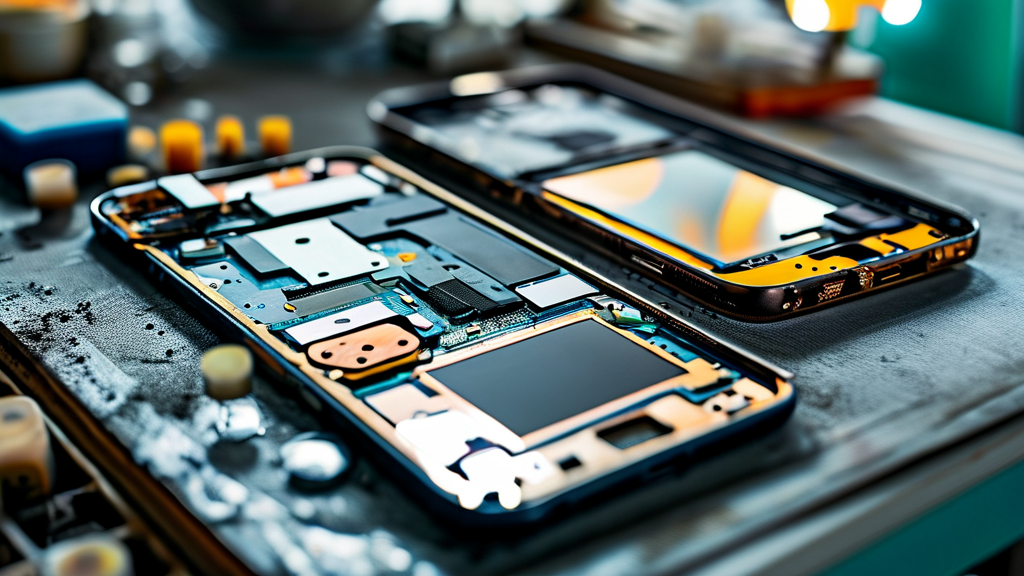
Hard OLED means the emitters sit on a rigid glass plate, and that plate stays in the panel. Soft OLED means the same emitters are built on a polyimide film: the plastic is cast as a liquid onto a carrier glass, processed like any other panel through the fab, and the carrier is removed at the end of the line.
OLED-Info’s flexible OLED briefing puts the difference in the plainest terms available: a plastic-based panel is lighter, thinner and more durable than a glass-based one. The same page notes that the first generation of flexible panels were only flexible at the factory, curved by the device maker and then fixed in place, which is a fair description of what most phones actually carry.
Specification source: OLED-Info, Flexible OLEDs, updated 9 August 2025, checked 10 November 2026.
Two things get confused with this distinction and both cost money. The first is “hard glass” on a listing, which refers to the cover glass hardness and has nothing to do with the panel substrate. The second is incell, which is an LCD with the touch layer built into the panel: a different display technology, not a lower tier of OLED. If you are weighing incell against OLED, that comparison belongs in our LCD versus OLED breakdown rather than here.
Neither hard nor soft is genuine. Both are aftermarket assemblies, and the genuine, refurbished and aftermarket tiers are a separate question covered in the three-tier comparison.
How each panel keeps water out
An OLED emitter is destroyed by water and oxygen. OLED-Info’s encapsulation briefing is blunt about the scale: even a single water or oxygen molecule can harm the organic layers. Every panel design is therefore an argument about how to keep a barrier around the pixels.
Rigid panels answer with glass. A glass plate below, a glass sheet above, sealed around the perimeter. Glass is close to a perfect barrier and it has been the default for a decade, which is why hard panels have a reputation for lasting. The cost is that the panel cannot bend, cannot be made thinner than two sheets of glass plus the stack between them, and cannot survive a crack in either plate.
Flexible panels answer with a deposited film. You cannot put a glass lid on a plastic substrate, so flexible panels use thin-film encapsulation: alternating organic and inorganic layers, with the organic layers inkjet-printed and the inorganic ones deposited by PECVD or atomic layer deposition. The barrier is no longer a material, it is a manufacturing result, and manufacturing results have variance. Pinholes, particles trapped under a layer, and the width of the edge seal all decide how long the panel lives.
| Layer | Hard OLED assembly | Soft OLED assembly |
|---|---|---|
| Substrate under the pixels | Rigid glass plate | Polyimide film, processed on a carrier glass |
| Seal over the pixels | Glass lid, sealed at the perimeter | Thin-film encapsulation, organic and inorganic layers |
| Where barrier quality comes from | The material | The deposition process and the edge seal |
| Behavior under load | Bends until it fractures | Flexes and returns |
| Thickness and weight | Baseline | Roughly 30% less on TFE lines, measured against two-glass rigid panels |
| Characteristic failure | Substrate fracture from a corner impact | Barrier breach, then slow moisture damage |
Thirty percent is not a lab curiosity. OLED-Info’s encapsulation page records that Samsung’s UT One line, which pairs a glass substrate with TFE, cut thickness and weight by 30% against a rigid panel protected by two glass sheets. Take away one glass plate and you take away a third of the module.
Process source: OLED-Info, OLED Encapsulation, updated 6 November 2025, checked 10 November 2026. The 30% thickness and weight reduction is Samsung’s published comparison for its UT One panels, not a universal figure for every flexible assembly.
What the table cannot show is the part that matters commercially. A glass lid is a barrier you cannot improve and cannot degrade. A thin-film barrier is one you can. Two soft panels from two lines can have edge seals of different widths, and the one with the narrower seal will pass every bench test you run and fail in the field.
What each barrier does when the phone hits concrete
A drop does not test the picture. It tests how the stack distributes energy, and the two substrates distribute it in opposite ways.
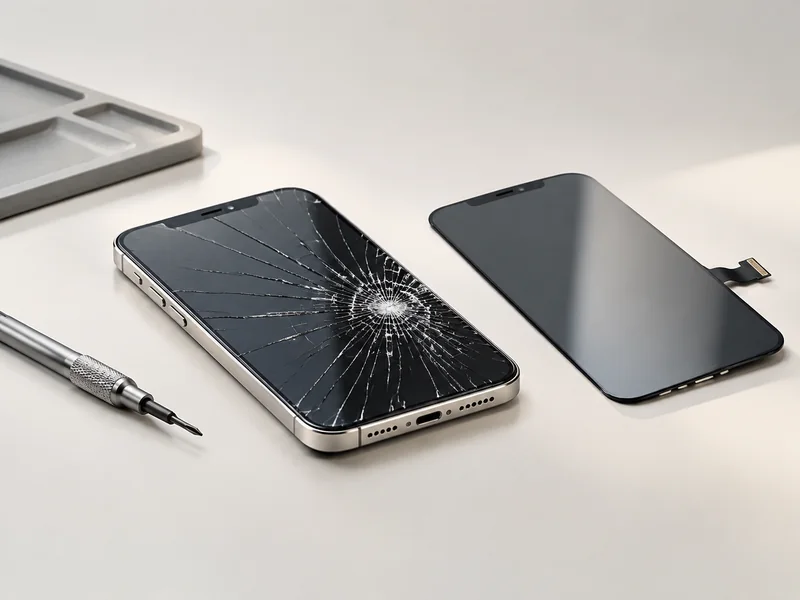
On a hard panel, the impact travels through the frame into a brittle plate. The frame flexes a fraction of a millimeter, the glass substrate does not, and the difference has to go somewhere. It goes into a fracture, usually starting at a corner. The front glass often survives, which is the confusing part: the customer hands you a phone with an unbroken screen that is completely dead.
On a soft panel, the polyimide deforms and returns. The panel absorbs the same energy by bending rather than cracking, and the assembly usually survives a drop that would have killed a hard unit. That is the entire basis for calling soft OLED the premium tier, and it is a real advantage.
It comes with a debt. The same thin stack that flexes is the stack whose barrier can be breached by a particle or a bad edge seal, and moisture damage is not instantaneous. It starts as a dark spot at the edge, or a faint line that grows over days. A soft panel that was fine at installation can fail at week three, at week nine, or after the customer has stopped associating the problem with the repair.
That asymmetry is the thing to hold onto: hard fails loudly and immediately, soft fails quietly and late. Price does not correlate with when the panel dies, only with how.
How to Tell a Hard OLED from a Soft OLED on the Bench
The gap between the two quotes creates an obvious incentive, and relabeled hard panels are the cheapest fraud in this trade. Four checks, all of them doable in under two minutes on an uninstalled unit.
Bow the assembly gently along its long edge, holding it by the two short ends. A soft panel gives a few millimeters and springs back. A hard panel gives nothing, and pressing harder to confirm is how you crack one, so do not.
Read the thickness with a caliper at the chin and again at mid-panel. The numbers are model-specific, so record both on the receiving sheet instead of memorizing a target. A batch that reads consistently thinner than your last good lot is either a different build or a different substrate, and either way you want to know before it reaches a bench.
Measure the bottom border. A rigid substrate cannot fold the driver flex behind the panel, so hard assemblies often carry a wider chin on models where the original was built on plastic. Lay the part on a known soft unit or an original and compare the border, not the whole outline.
Weigh ten units on a 0.1 g scale. Hard is heavier for the same model, and more useful than the average is the spread: a mixed pallet shows up as a spread, not as an offset.
Then put the substrate on paper. “OLED” is not a specification, “OLED on polyimide with thin-film encapsulation” is. A supplier who cannot state the substrate on an invoice line is a supplier who has not asked the factory. The rest of the incoming routine, including what to test at first power-on, is in our pre-purchase inspection guide.
What changes on the bench
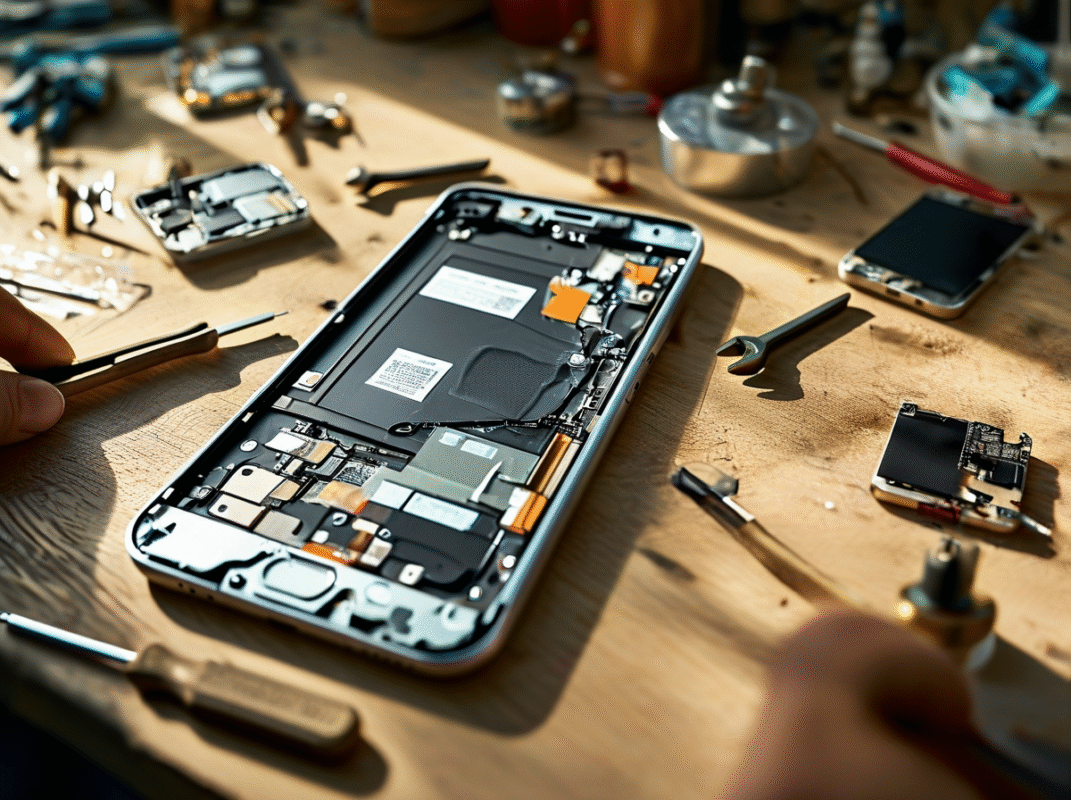
A flexible panel needs a backer under it whenever you press. The stack is thin enough that pressure over the battery cutout creases it, and a crease does not show up as a black line. It shows up as a shadow at an angle, and the customer finds it in daylight a week later.
Hard panels have the opposite installation risk. They do not crease, but they do not forgive a point load either: pressing a corner to seat an adhesive clip is how a rigid substrate gets a hairline that opens into a line of dead pixels two days later. Distribute pressure across the panel, not at the point you are trying to fix.
Press order matters more than pressure. iFixit’s iPhone 13 screen guide runs the same order of operations on both tiers, and it works because the panel is supported from behind at every step rather than levered at the edge.
Frame fit is where the thickness difference becomes visible to the customer. A hard assembly on a frame built for a thinner stack sits proud at the chin, and a screen protector or a tight case will show it. Check the fit before the adhesive sets, not after.
Registration matters more on soft panels because the thinner stack can sit fractionally lower in the frame. Confirm the proximity sensor window and the earpiece mesh line up before closing, and never flex a finished unit to test whether the panel is loose. The test that identifies a loose panel is the test that breaks it.
Hard OLED vs Soft OLED: What the Price Gap Buys per 100 Units
Per unit the gap looks small; in a purchasing decision it does not stay small, so put both sides in one table. The numbers below are an example basis for an iPhone 13-class assembly; substitute your own quote and your own return data, because the arithmetic is the point rather than the figures.
| Line item | Hard OLED | Soft OLED |
|---|---|---|
| Unit cost | $21 | $29 |
| 100 units | $2,100 | $2,900 |
| Returns per 100 fitted | 6 | 2 |
| Cost per return event | $55 | $55 |
| Return cost | $330 | $110 |
| Drop callbacks within 90 days | 3 | 1 |
| Callback cost | $165 | $55 |
| Total | $2,595 | $3,065 |
A return event is priced at the replacement part, the inbound freight and about 25 minutes of bench time. At those assumptions, the soft panel’s better survival record recovers $330 of a $800 premium, and the honest summary is that defect economics alone do not pay for soft OLED. It costs about $4.70 more per unit after everything it prevents.
That result contradicts the way the trade usually sells the upgrade, and it is worth sitting with. If you are buying soft to cut your defect rate, you have bought the wrong thing: the returns it prevents are worth a third of what it costs. The case for soft is a pricing case. If the tier lets you bill $20 more on a repair and the customer accepts, you need 24 of those 100 units to cover the gap, and everything above that is margin.
Figure basis: unit costs and return rates are illustrative for a 13-class assembly, not a quotation. Return cost assumes part replacement at cost, $9 inbound freight and 25 minutes of bench time at $1.20 per minute. Substituting your own RMA data will change the totals; the direction of the result holds while the soft premium stays near a third and return rates stay under 10%.
Which is why the tier decision should follow the customer, not the defect rate. A shop buying soft for walk-in price shoppers is paying for impact tolerance that nobody in the transaction values.
Which one to stock
| Customer segment | Tier | Reason |
|---|---|---|
| Price shopper, phone worth under $250 | Hard | The repair has to stay under the phone’s resale value |
| Insurance and warranty work | Soft | Cosmetic parity is checked against a written standard |
| Refurbishment and resale | Soft | The unit is compared side by side with an original before it sells |
| High-drop environments, rental fleets | Soft | Impact tolerance is the failure mode that matters |
| Older models, high turnover | Hard | Volume at thin margin, and nobody compares an iPhone X to anything |

Two tiers per model is the practical ceiling. A third tier at the counter does not increase conversion, it increases the number of SKUs that age out of the fast movers, and a pallet of the tier nobody chose is the most expensive stock in the building.
Model coverage is a hard constraint rather than a preference. Soft panels exist for phones that shipped with OLED, which means the iPhone X and later, apart from the XR, the 11 and the SE models that stayed on LCD, as the Apple model list shows. Ordering a soft assembly for a model that never had one gets you a relabeled hard panel or a part that will not fit.
If the defect rate on your current supplier is the real problem rather than the tier, the number to compare against is in our defective rate standard rather than in the grade label.
When hard OLED is the wrong buy
Tight-tolerance frames are the clearest case. If the assembly sits proud and the customer’s case no longer seats, you have saved eight dollars and created a callback that costs more than the part.
Refurbishment and resale are the second. A unit that will be inspected next to an original before it sells needs the thinner stack, the narrower chin and the drop behavior, because the buyer is comparing, not measuring.
Insurance work is the third, and the least negotiable. When the standard is a written cosmetic specification rather than a price, a hard panel that technically works is still a failed repair.
The fourth is any customer who will drop the phone. A hard panel’s failure mode is impact, and you will meet that failure again at the counter, on your time.
When soft OLED is the wrong buy
Phones whose resale value sits below the price gap. A $29 panel in an $80 phone is a repair the customer will decline, and a declined quote costs you the bench minute and the goodwill.
Unverifiable listings. Paying soft money for hard goods is the most common way to lose on this trade, and it usually runs for two or three batches before anyone checks with a caliper.
Models with no soft supply in volume. On those, a soft listing is a hard panel with a better adjective, and the only way to find out is the checks above.
Also worth saying: soft is not automatically the better panel for a rough user. It bends under impact, which is what you want, but a breached barrier in a humid climate fails just as surely as a cracked substrate, only later and more quietly. A soft panel from a line with a poor edge seal is worse than a good hard panel, and the label will not tell you which one you have.
Telling a defect from a drop
This is where the substrate argument pays for itself, because the two panels fail with different signatures and the signatures decide who pays. Photograph every unit at unbox, at first power-on, and again at 72 hours. The third photo is the one that wins arguments.
| What you see | What it usually means | What to do |
|---|---|---|
| Front glass intact, crack radiating from one corner, scuff on the frame | Impact. Rigid substrate fractured while the frame flexed | Charge the customer, not the supplier |
| Dark spot or line growing from an edge over days, no impact mark | Moisture ingress through the edge seal or a barrier pinhole | Supplier claim, with the dated photo series attached |
| Dead strip or line at first power-on, no damage | Driver IC or chip-on-glass bond failure | Supplier claim the same day |
| Line appears immediately after fitting pressure at one point | Installation. Pressed without a backer | Absorb it and change the bench procedure |
| Panel dead after a fall, corner of the frame gouged | Impact | Not a supplier claim on either tier |
| Uniform brightness loss over months | Normal aging | Out of scope for both |
The rule underneath the table is simple enough to give a counter clerk: a crack that starts at a corner and stops being interesting in a day is impact; anything that grows from an edge over three days is ingress; anything broken the first time it lights up is a supplier problem.
How those claims are worded, timed and evidenced is the subject of the RMA terms guide, which is worth reading before the next claim rather than after.
Questions that come up on the bench
Is soft OLED an original screen?
No. Soft describes the substrate, not the supplier. Both hard and soft are aftermarket assemblies; a genuine panel carries the manufacturer’s own calibration and pairing data, which no aftermarket part replicates.
Does soft OLED support 120 Hz?
Refresh rate is set by the driver IC and the backplane, not by the substrate. Variable refresh at that level needs an LTPO backplane, which combines LTPS and IGZO transistors and saves roughly 5% to 15% of display power against LTPS alone. A flexible substrate grants none of that on its own, so check the rating on the specific part rather than the tier name.
Specification source: OLED-Info, LTPO OLED backplane technology, checked 10 November 2026. The 5–15% power saving is the range OLED-Info gives for LTPO against LTPS backplanes.
Can a soft panel go into any iPhone?
Only into models that shipped with OLED, which is the X and later with the XR and the 11 as exceptions. Fitting an OLED assembly to an LCD phone is a conversion, not a drop-in replacement.
Why does my hard OLED show green lines with unbroken glass?
Because the substrate is glass. A corner impact flexes the frame, the plate does not follow, and the fracture starts inside the panel while the cover glass absorbs the visible damage. The line is the fracture, not a software fault and not a loose connector.
Are hard OLED and incell the same thing?
No. Hard OLED is an emissive panel on a glass substrate. Incell is an LCD with the touch layer integrated, which needs a backlight and cannot produce true black, while an OLED panel emits its own light and needs no backlight at all. The price overlap between a cheap hard OLED and a good incell is a coincidence of the market, not a shared technology.
Sources
| Document | Issued by | Reference |
|---|---|---|
| Flexible OLEDs: introduction and market status | OLED-Info | Updated 9 August 2025 |
| OLED Encapsulation: introduction and market status | OLED-Info | Updated 6 November 2025 |
| LTPO OLED backplane technology | OLED-Info | Checked 10 November 2026 |
| OLED technology: introduction and basics | OLED-Info | Updated 27 April 2026 |
Panel construction claims in this article describe the two architectures as they are built, not the build quality of any specific supplier. Where a figure is quoted, the source and the check date are given next to it; where a number is an assumption, it is labeled as one.






Recent Comments